

The boundary is not a refusal to collaborate. It is what makes collaboration safe: the customer retains authority for what the exchanger must do, while the manufacturer takes responsibility for how the agreed equipment is detailed and fabricated.
The customer owns equipment intent
Thermal duty, process conditions, heat-transfer calculations, equipment selection, overall geometry, required interfaces, governing design basis and installation envelope remain customer responsibilities unless a separate written scope says otherwise.
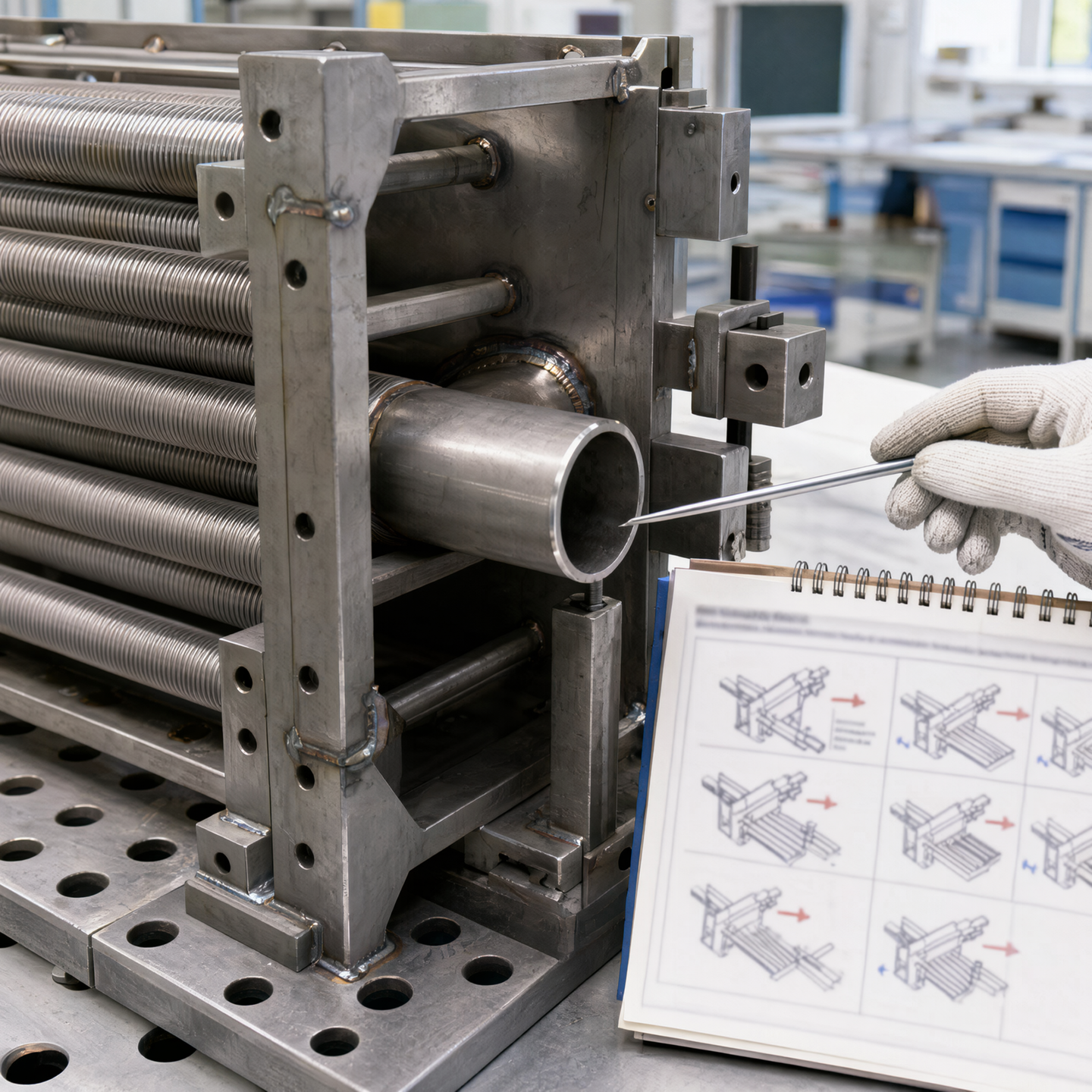
The manufacturer owns the build route
Manufacturing engineering covers fabrication detail, access, fit-up, joining order, practical process capability, frame and support detail, handling, assembly planning and the inspection basis agreed for the order. It may expose a need to change the design, but it does not silently change the thermal basis.
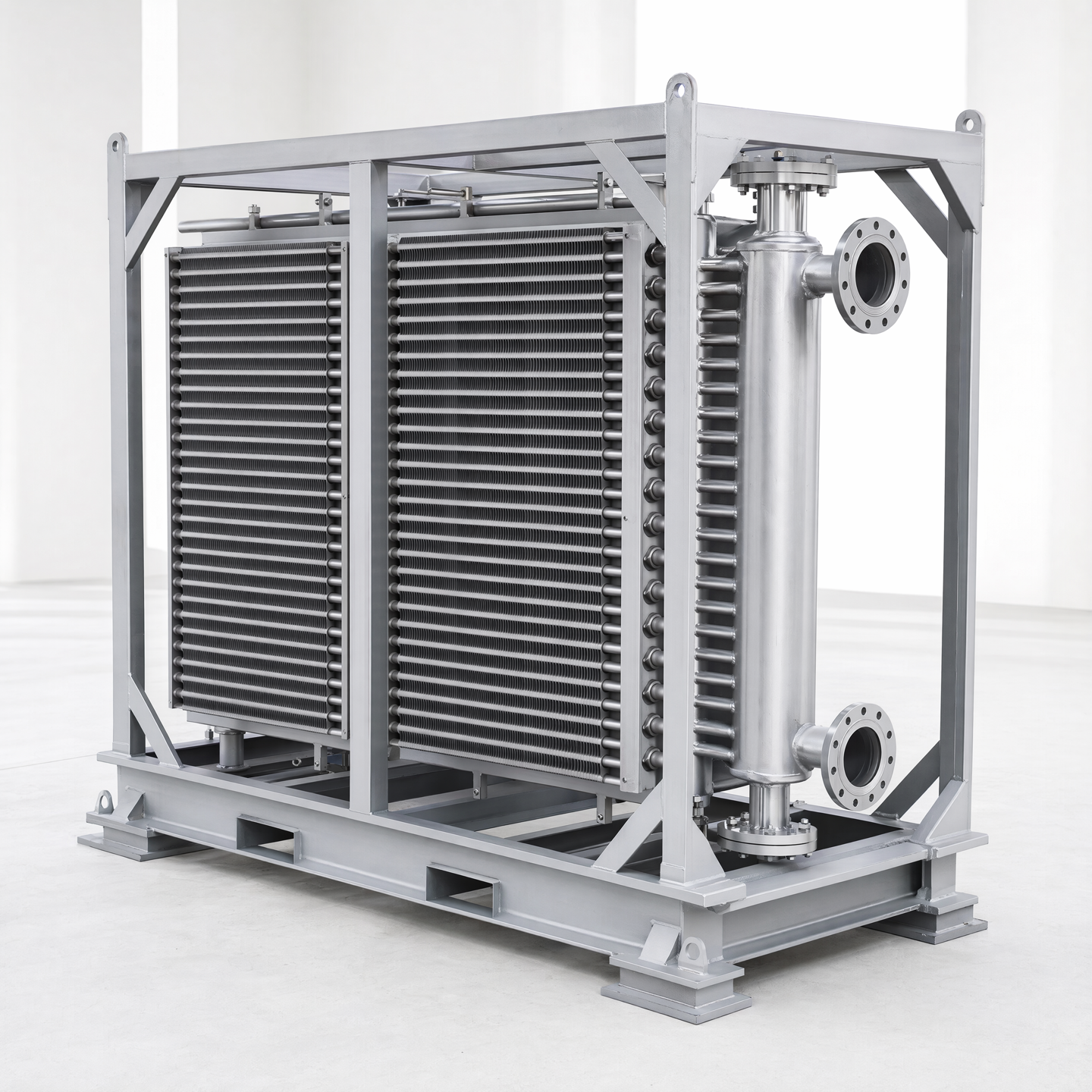
Changes move through an agreement loop
When the proposed geometry conflicts with access, process capability or assembly order, the manufacturer explains the manufacturing issue and proposes an alternative. The customer accepts, rejects or revises the proposal as design authority. The approved result becomes the fabrication basis.

Ownership matrix
| Customer authority | Manufacturer responsibility | Shared agreement |
|---|---|---|
| Thermal duty and process conditions | Manufacturing questions created by the proposed geometry | Any geometry change that affects the design basis |
| Heat-transfer design and equipment selection | Fabrication details, access and sequence | Drawing revisions and quotation assumptions |
| Overall geometry and required interfaces | Frames, supports, fixtures and assembly planning | Datum and interface-check plan |
| Governing design and acceptance requirements | Manufacturing records and checks included in scope | Order-specific inspection basis |
| Installation envelope and delivery need | Handling, protection and assembly boundary | Final delivery state |
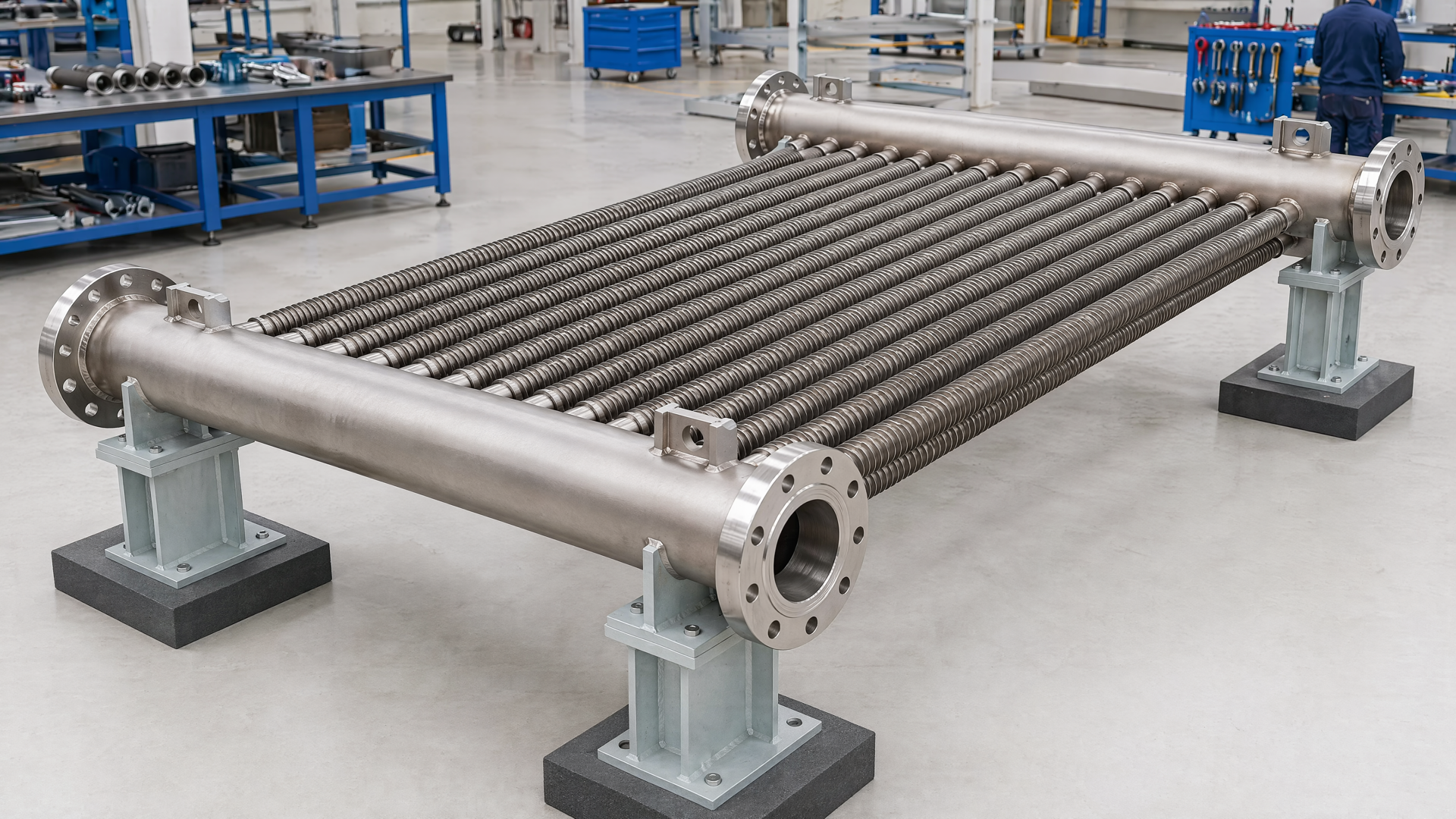
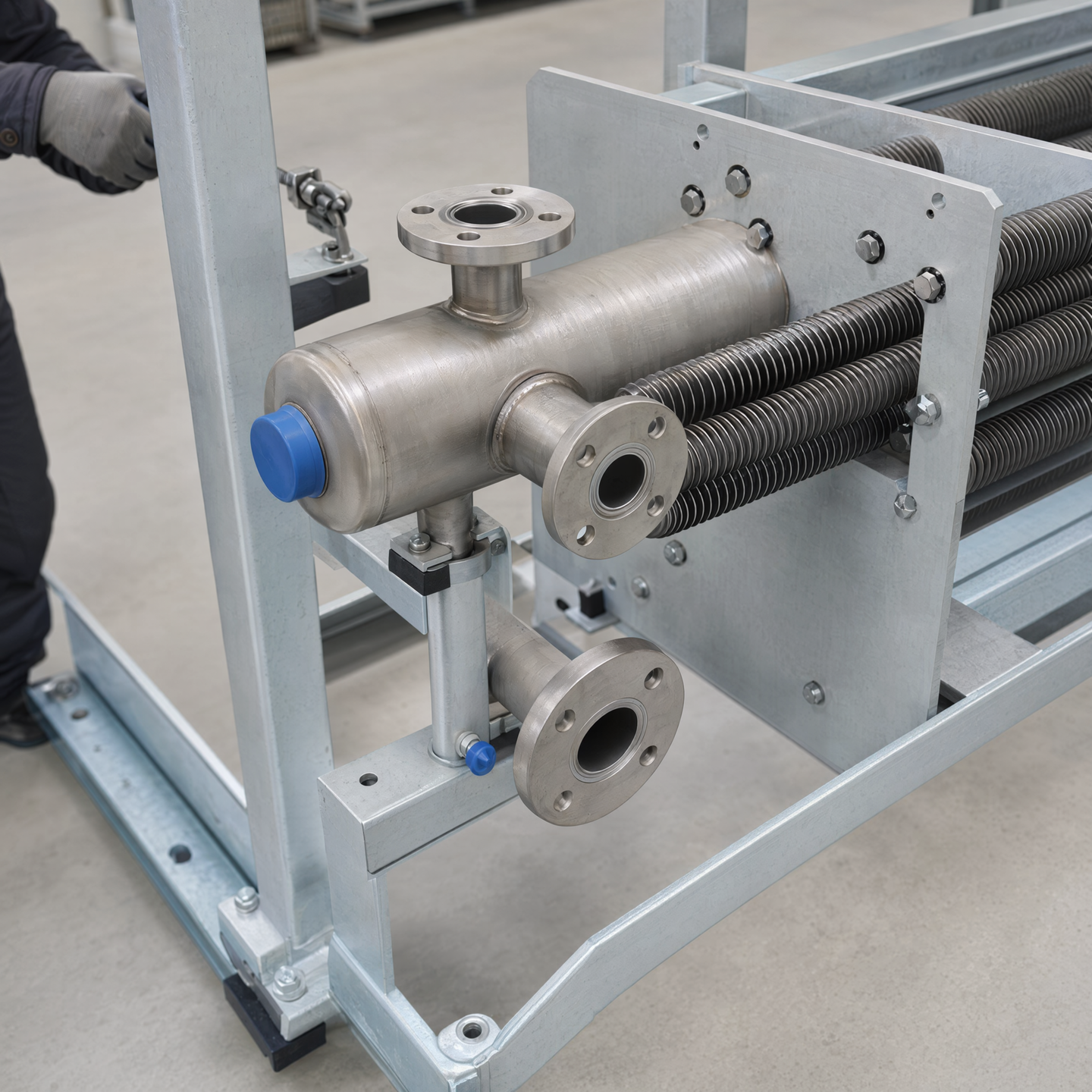
Agreement-loop atlas
The responsibility boundary becomes practical when every manufacturing proposal points back to a customer-controlled interface or requirement. These illustrations show where questions originate and how the approved answer should remain visible through fabrication detail, records and the complete equipment state.


Use one owner for every decision
- The customer confirms thermal duty, equipment intent, geometry and required interfaces.
- StelTherm explains the fabrication conflict and proposes a practical manufacturing response.
- Both sides record the accepted change, assumption or exclusion in the controlling project documents.
- The fabrication and handoff state are checked against that agreed basis, not against an implied capability.
Assign ownership before the decision becomes urgent
Responsibility is easiest to maintain when the project names the owner while the design is still open. Waiting until fabrication exposes a conflict can blur whether the question concerns equipment intent, an interface requirement, a manufacturing detail or the commercial boundary of the order.
1. Thermal duty and equipment intent belong to the customer
The customer or its appointed design authority defines process conditions, thermal duty, heat-transfer design, equipment selection, overall arrangement and the performance basis. StelTherm may identify that a proposed geometry is difficult to fabricate, but that observation does not authorize a different thermal design or a guarantee that an alternative will meet the intended duty.
2. Required interfaces remain customer-controlled
Mounting points, connection positions, installation envelope, service-clearance requirements and project design standards come from the customer basis. The manufacturing review needs those interfaces identified and prioritized. When a proposed detail affects them, the change returns for approval rather than being absorbed into fabrication as an undocumented shop adjustment.
3. Fabrication detail belongs to the agreed manufacturing scope
StelTherm develops practical details for fit-up, access, restraint, sequence, frames, supports, temporary aids, assembly and protection where included in the quotation. Those details translate the approved equipment geometry into a build route. They do not expand the order to every process, supplied item, test or document shown in an illustration.
4. Geometry changes require a recorded agreement
A good proposal states the affected feature, the manufacturing conflict, the practical alternative and the customer requirement that remains unchanged. The design authority can then accept, reject or revise it. The approved answer is incorporated into the controlling drawing, redline, interface register or scope note so later work does not depend on an informal message.
5. Inspection basis is shared and order-specific
The customer states governing requirements and the features that matter. StelTherm plans when those agreed features can be checked within the manufacturing route and what selected records are included in scope. Neither side should infer a method, standard, certification or acceptance result that has not been supported by the order documents and quotation.
6. Handoff condition closes both technical and commercial scope
Define what arrives complete, protected, loose or prepared for later work. Identify customer-supplied items, excluded installation activity, open interfaces and selected records. A clear handoff prevents a complete-looking illustration from being interpreted as a promise of site work, thermal commissioning, third-party approval or any other service outside the agreed manufacturing scope.
Clear ownership supports collaboration because questions move to the person authorized to decide them. It also protects public copy: illustrative configurations remain references, not proof of certified capability, project history or guaranteed performance.
Reconfirm ownership when scope or sources change
A new drawing revision, customer-supplied component, governing requirement, inspection request or installation constraint can move a decision between parties. Revisit the interface register and quotation assumptions rather than relying on the earlier responsibility map. State whether the change affects equipment intent, a customer-controlled interface, a fabrication detail or only the commercial boundary of the manufacturing scope.
If verified capability data or a publishable project record becomes available, update the specific dependent statements and captions with source ownership and revision status. Do not use one new fact to imply broader certification, material range, capacity or project history. The agreement loop remains the same: identify the owner, explain the consequence, record approval and carry the answer into the controlling artifact. If responsibility is transferred by a separate written scope, state that exception explicitly and update the interface register, quotation assumptions and public wording that depend on it. Keep the exception and approving authority traceable.
Responsibility also has a timing dimension. The person who may approve a geometry change may differ from the person who can clarify purchasing data or accept a commercial exclusion. Record the response needed and the latest manufacturing stage at which it remains useful. If approval arrives after a fixture, detail or sequence has been released, assess the downstream effect before treating the answer as closed. A visible decision deadline and affected-artifact list keep urgent shop questions from becoming informal transfers of design authority or unpriced additions to the agreed manufacturing scope.