Resources / Manufacturing notes

Manufacturing notes for buildable exchanger designs

Practical guidance for the handoff between customer-owned thermal design and manufacturer-owned fabrication engineering.

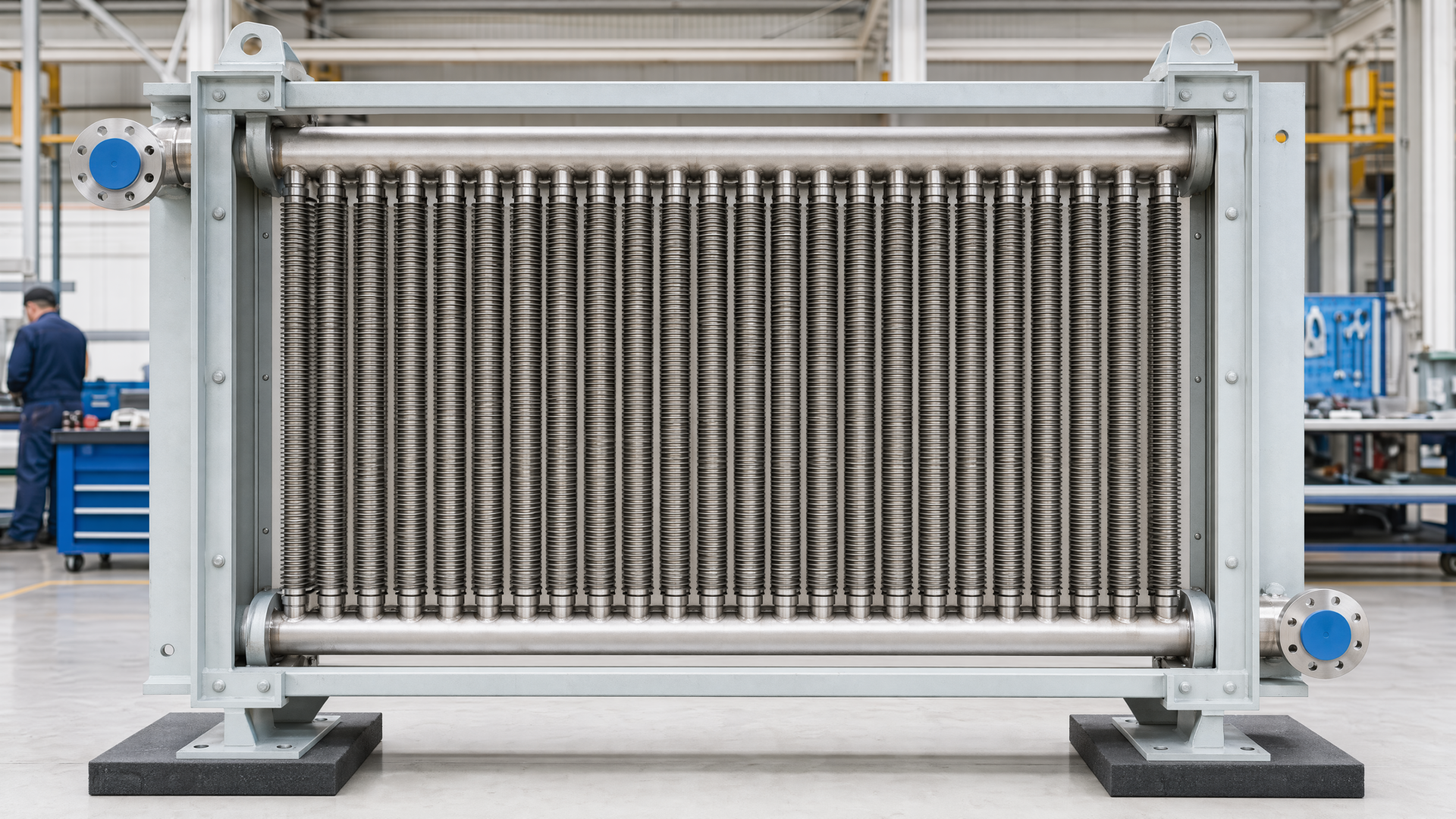
Illustrative complete rectangular finned-tube module with frame and connections
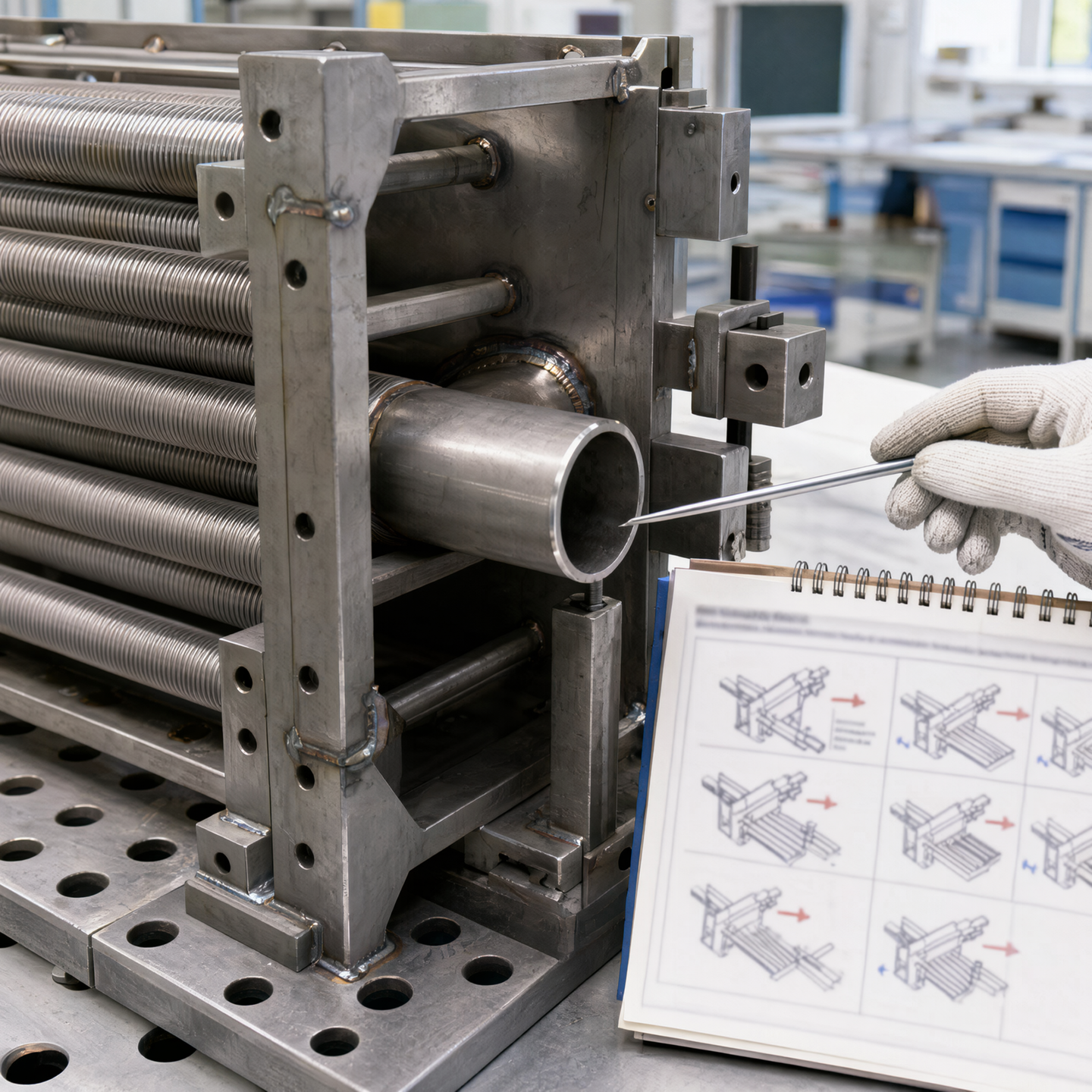
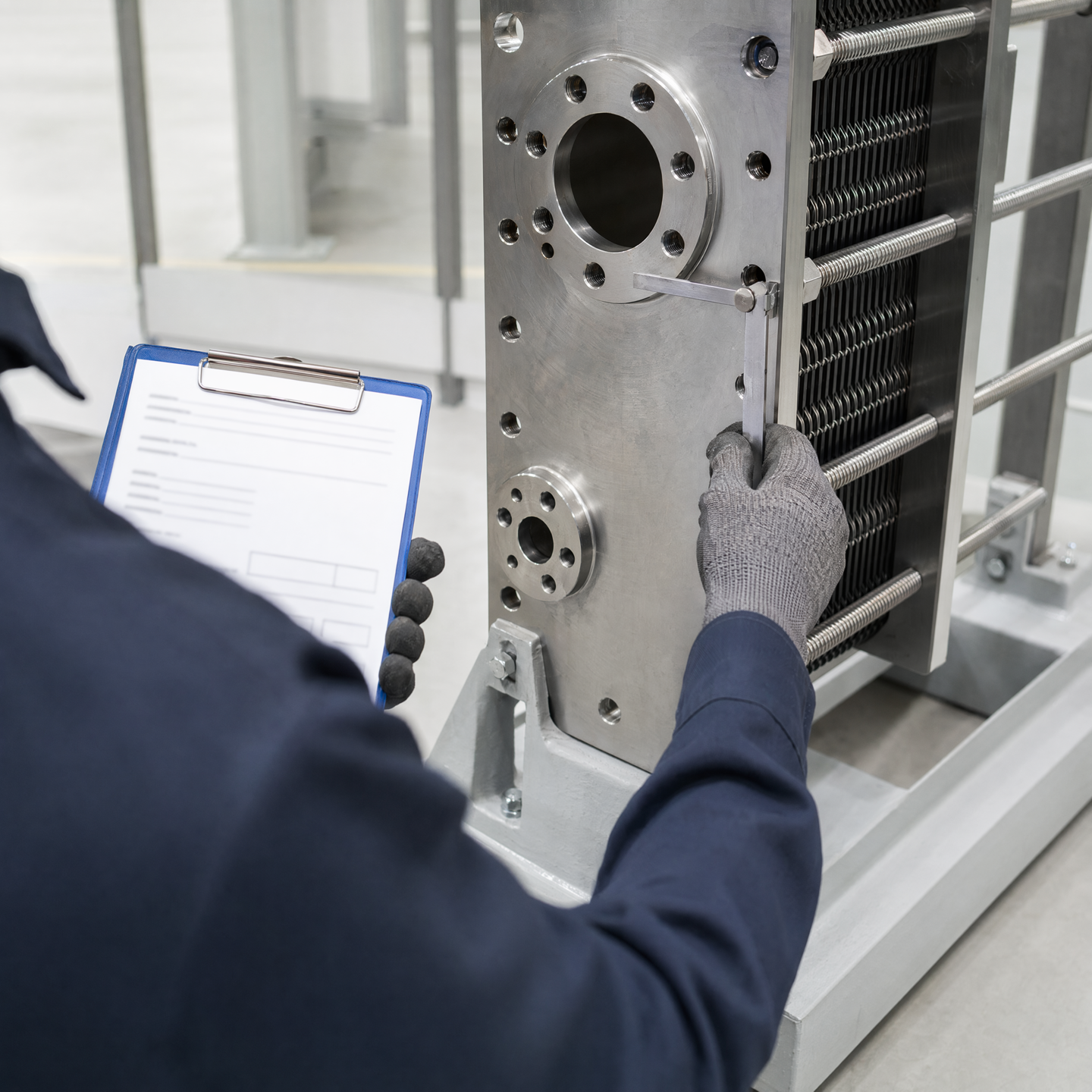
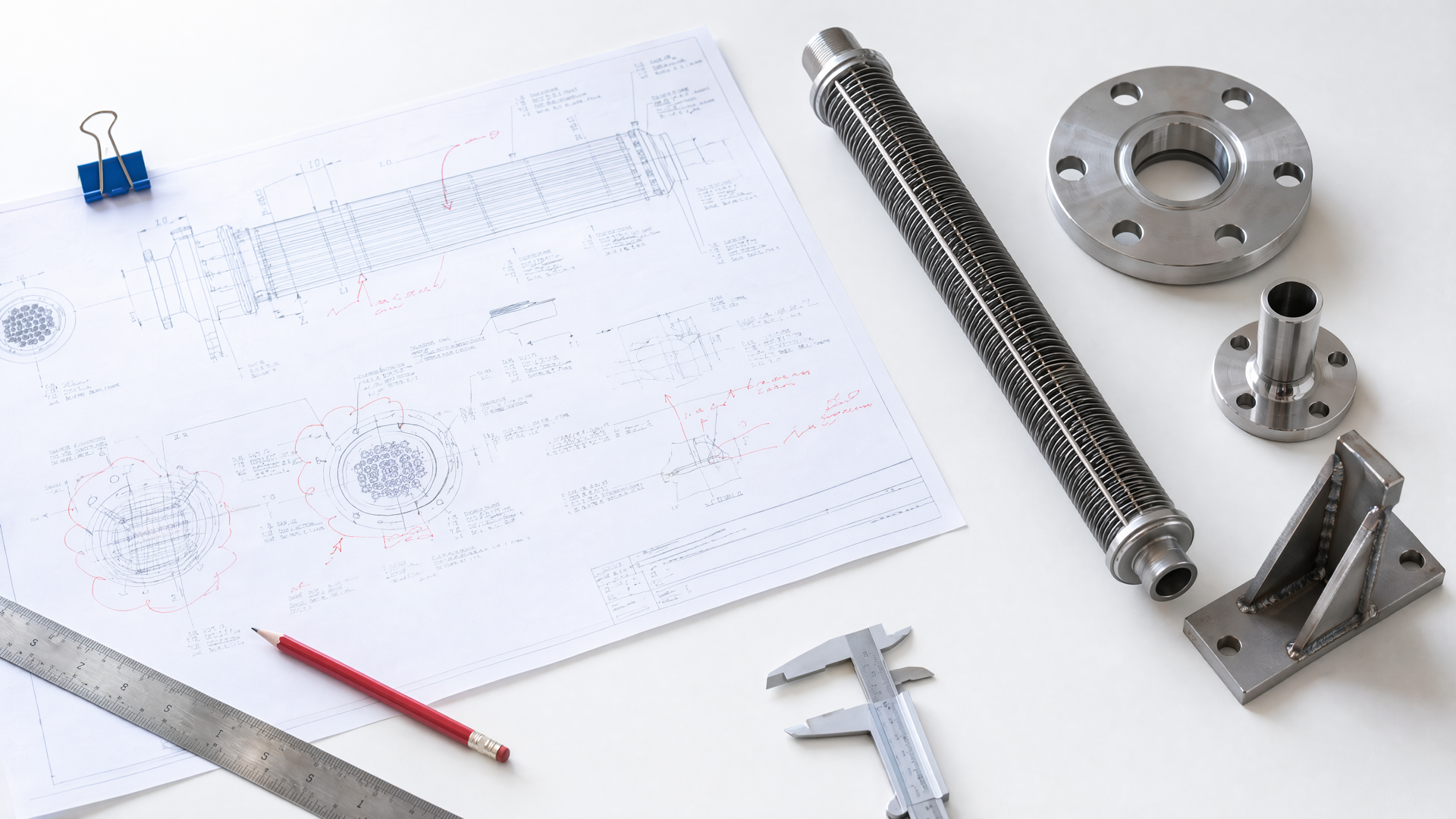
Drawing, redlines, finned-tube sample and flange prepared for a manufacturing review

Seven guides / One responsibility boundary

Questions to resolve before the floor has to improvise

Each guide stays on the manufacturing side of the boundary: access, sequence, alignment, handling and the information needed to agree a fabrication route.

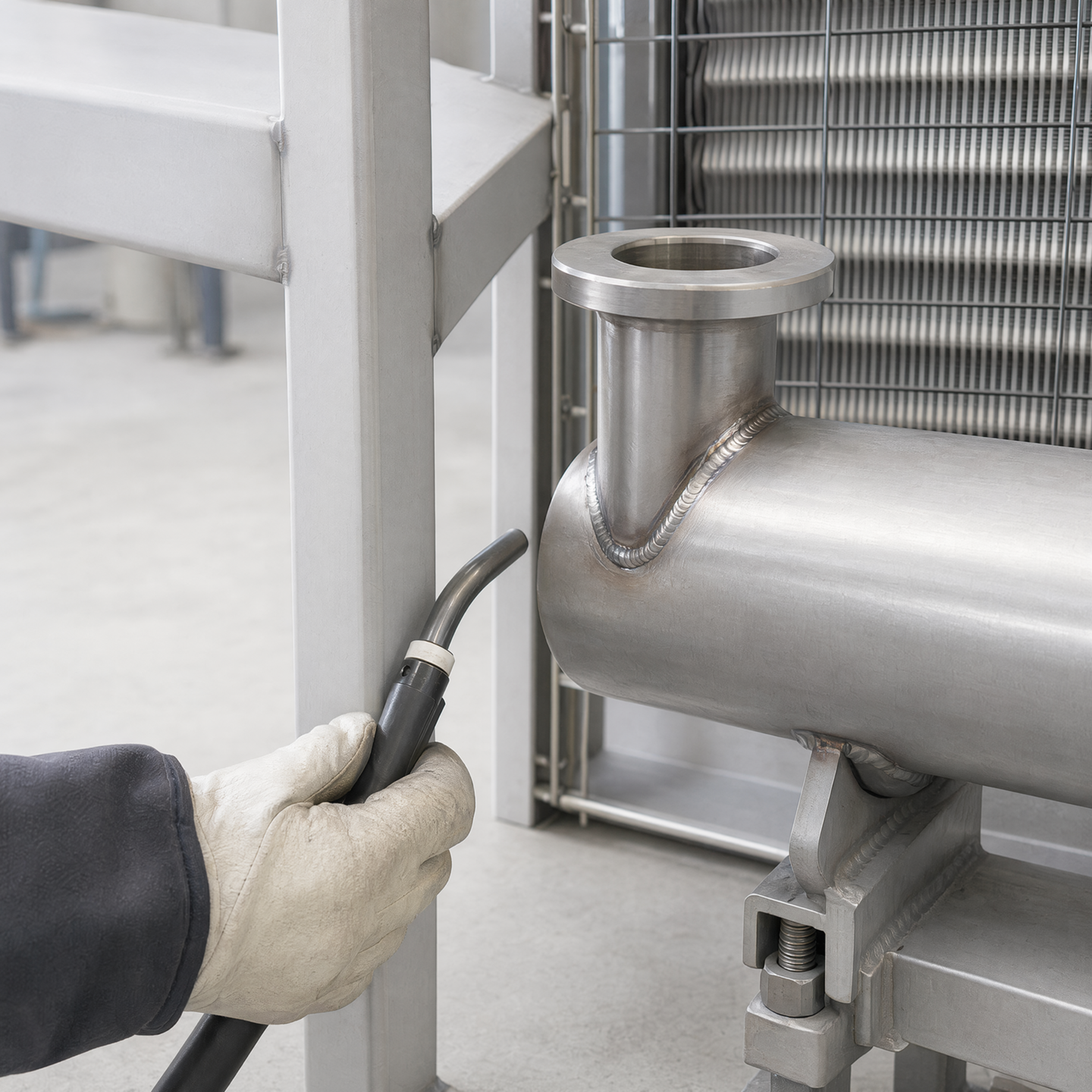
Weld-access and assembly-sequence planning beside a physical exchanger joint
Illustrative weld-access clearance around an exchanger connection

Access and sequence

Designing weld access into a finned-tube exchanger

Why torch angle, visibility, fixture space, closing sequence and inspection access belong in the design review.

Manufacturing guide / Article 01

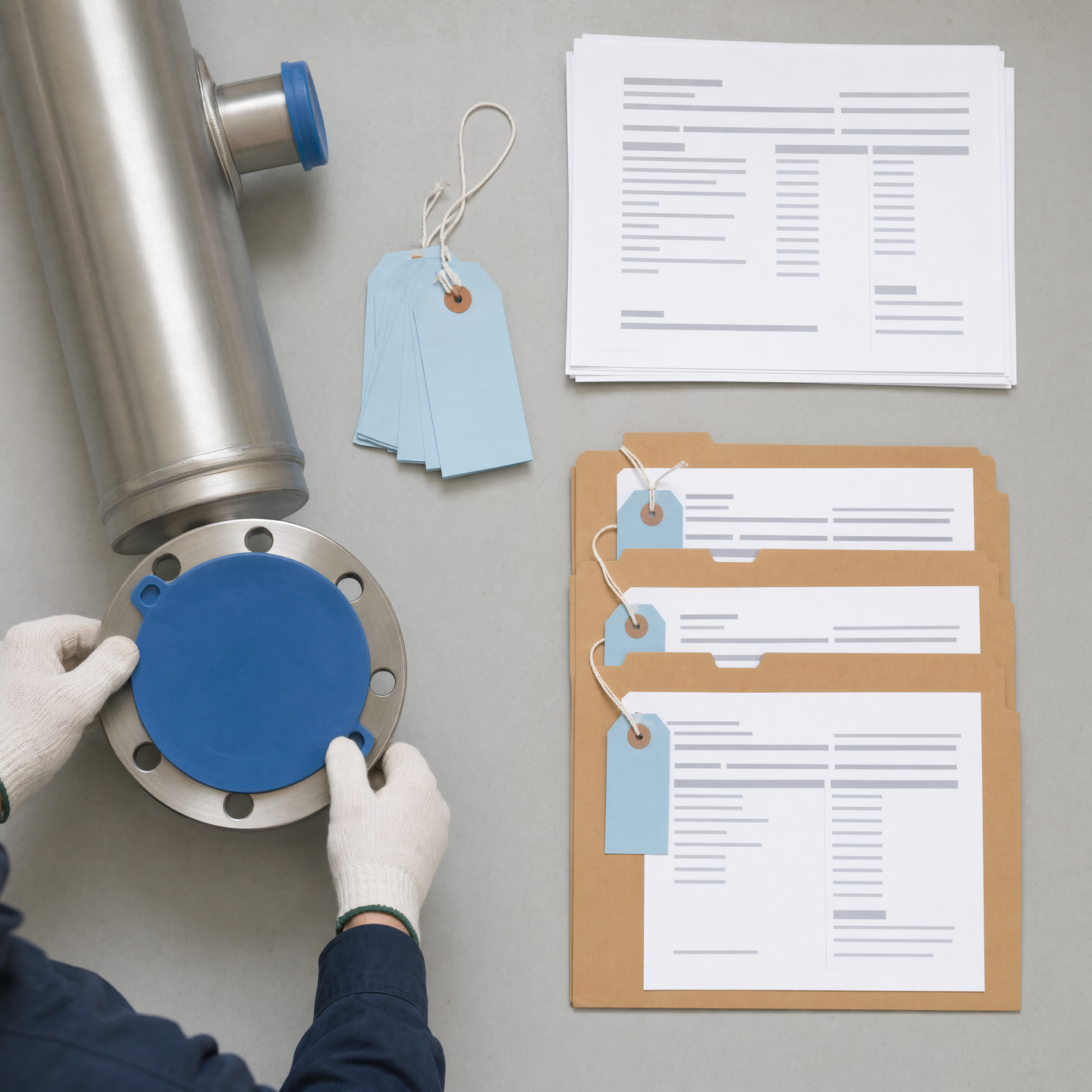
Illustrative interface list, tags and grouped non-readable review documents
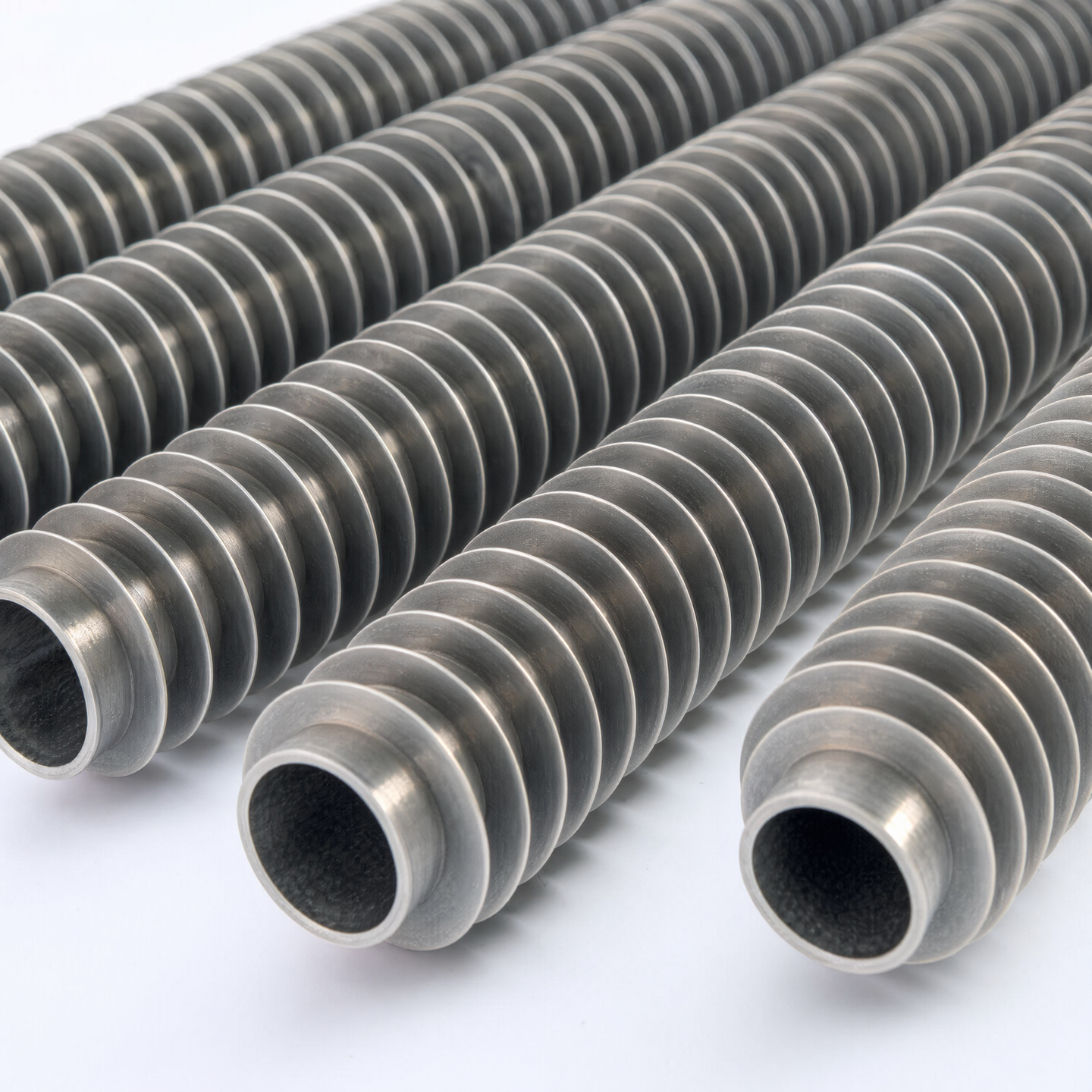
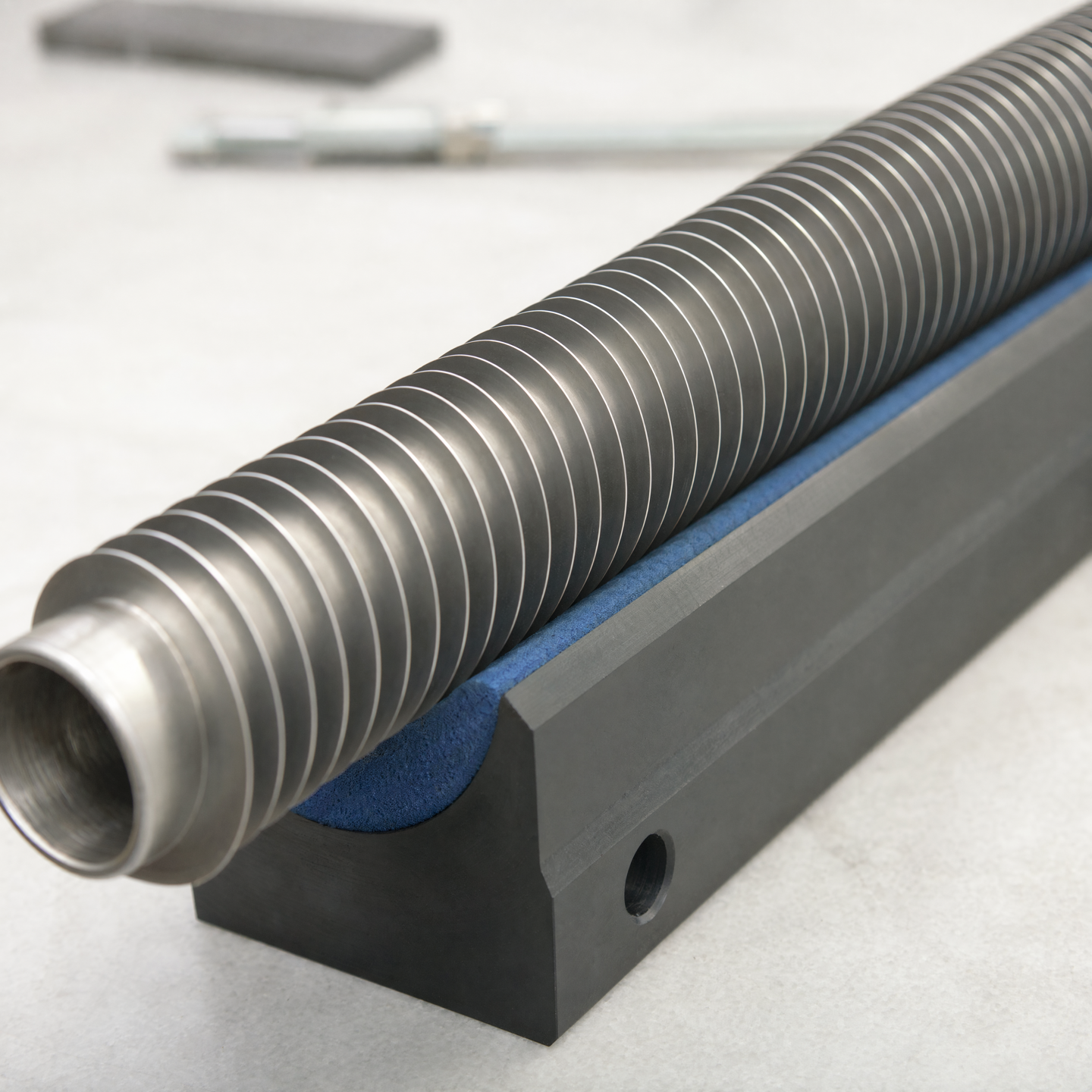
Close view of continuous fins on parallel tubes

Review package

What to include in a manufacturability review package

The inputs that let a manufacturer identify risks without taking ownership of the customer's thermal design.

Manufacturing guide / Article 02

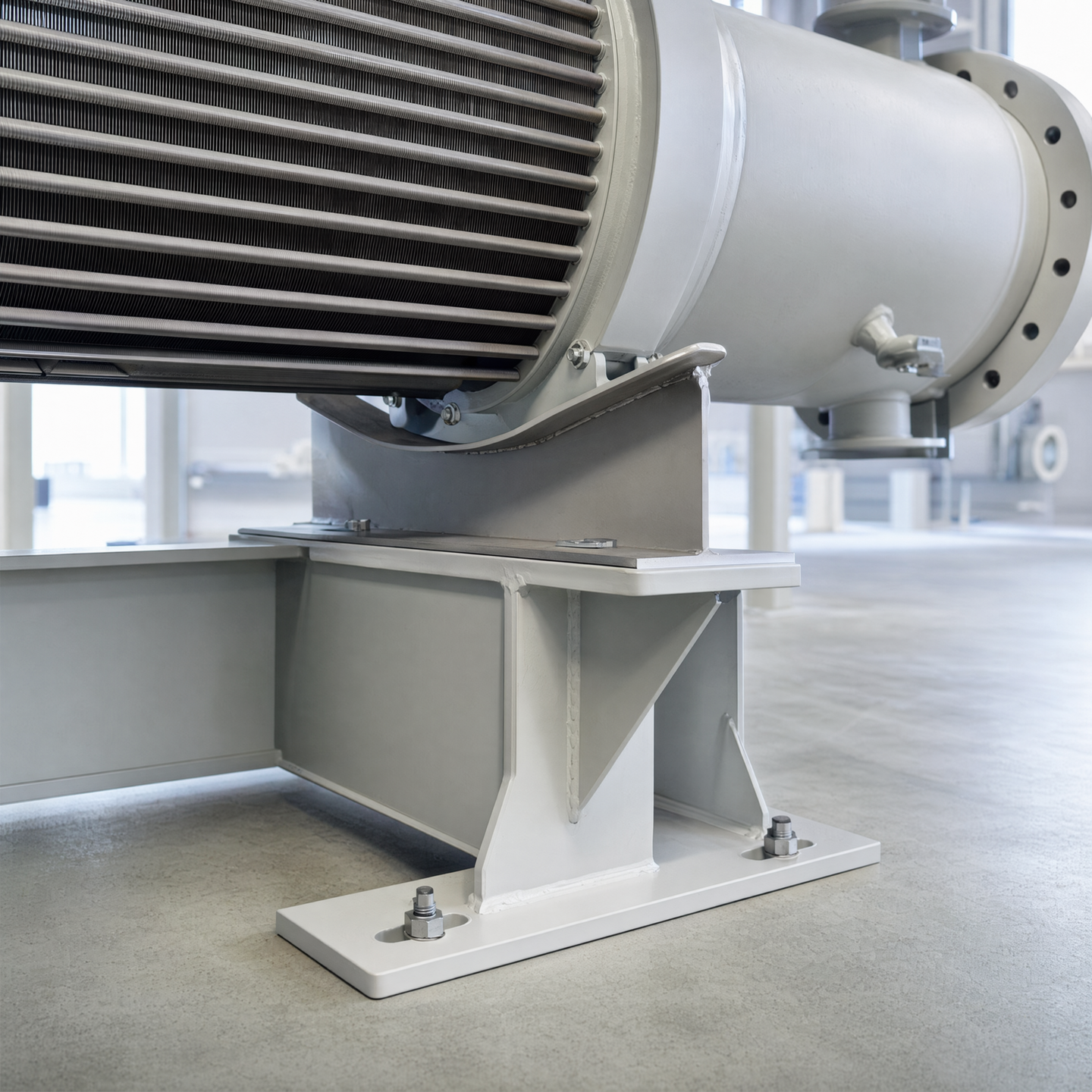
Support saddle, gussets and baseplate defining an exchanger installation interface
Illustrative inspection action shown with a non-readable record sheet

Structure and datums

How frame stiffness and weld sequence affect final alignment

Plan datums, restraint, assembly order and measurement stages as one manufacturing problem.

Manufacturing guide / Article 03

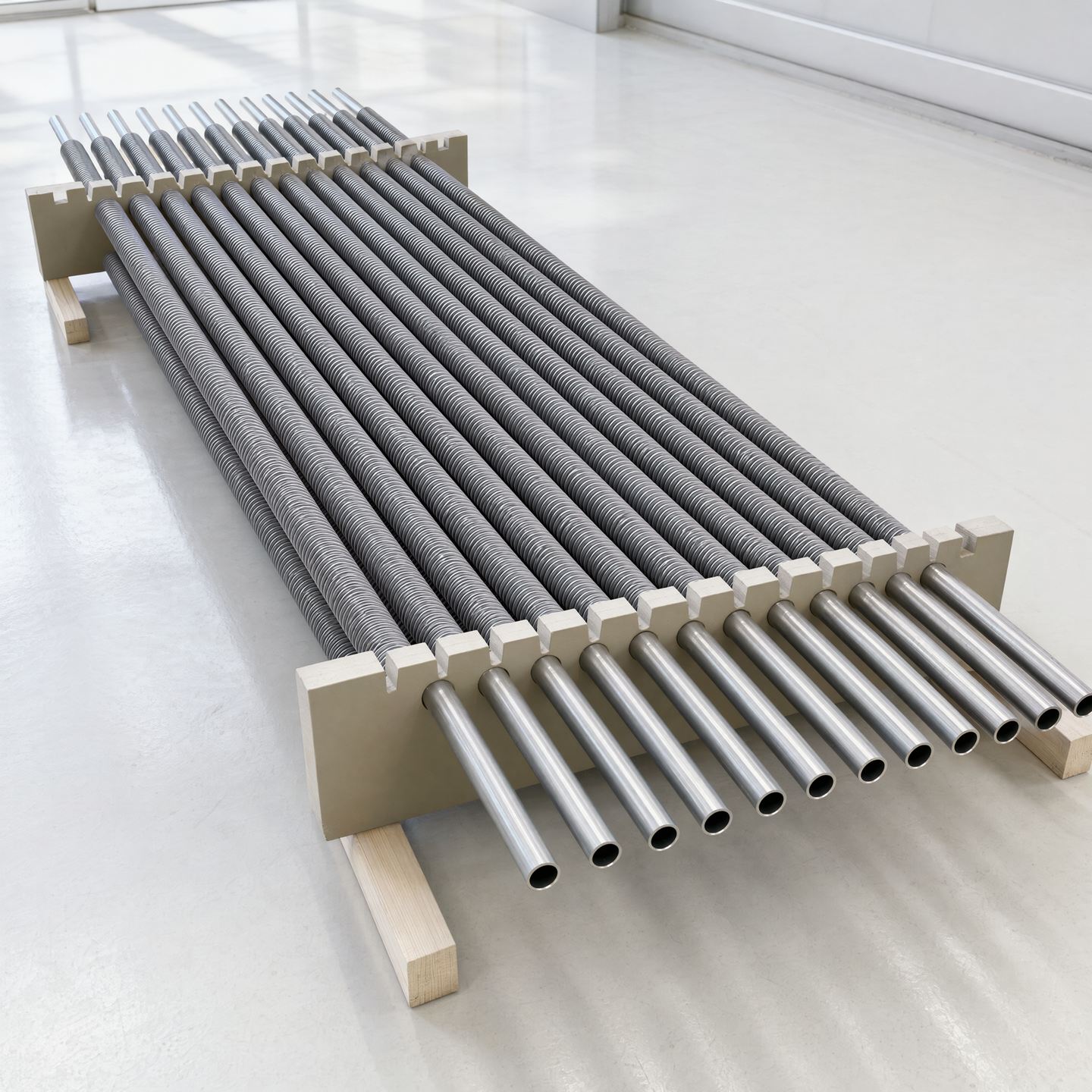
Long ordered finned-tube bundle resting on temporary supports
Illustrative close view of continuous fins around a tube body

Handling and protection

Finned-tube bundle handling points to define before fabrication

Pick points, temporary supports, fin protection and bare-end protection should be decided before movement begins.

Manufacturing guide / Article 04

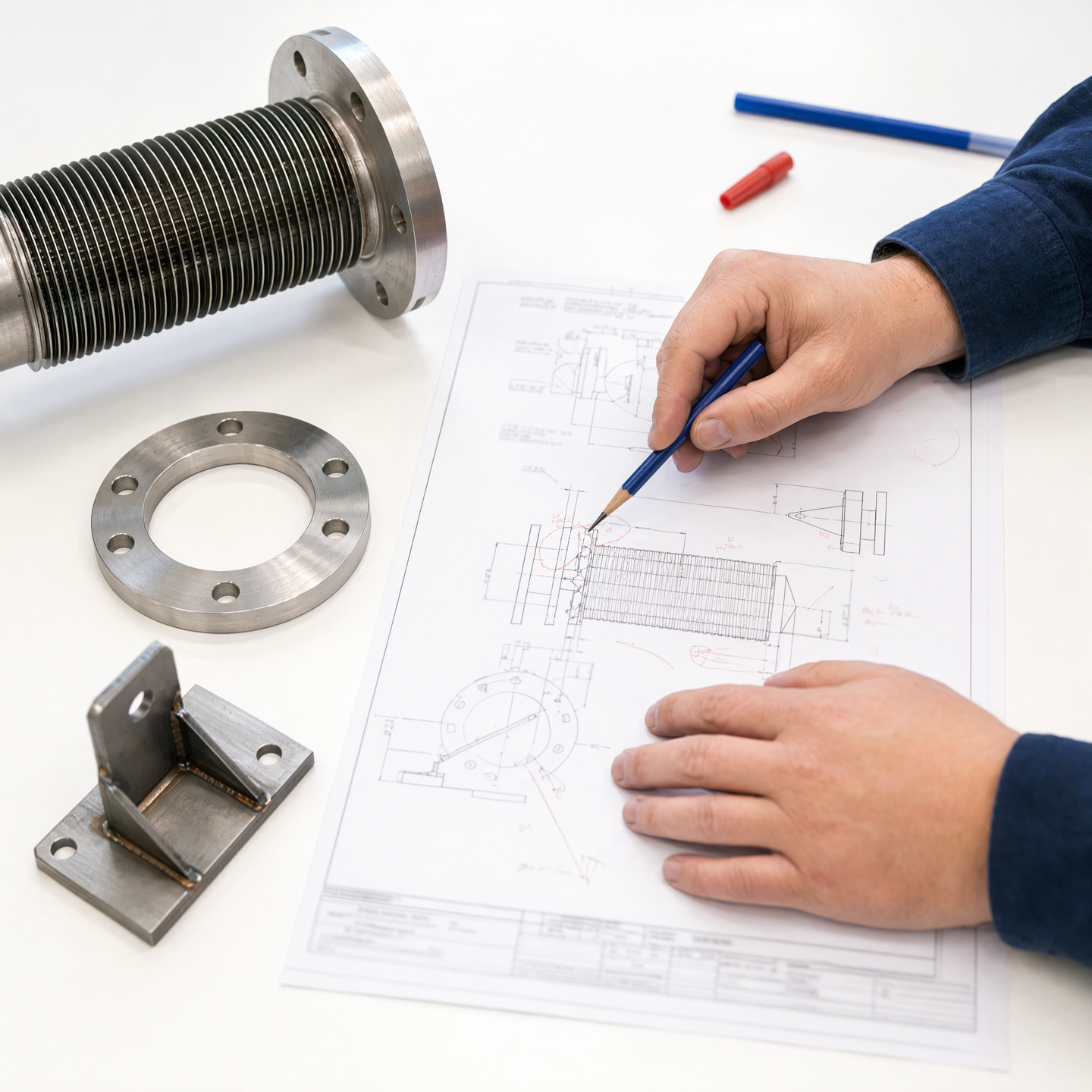
Manufacturing engineer reviewing a drawing beside finned-tube and flange components

Responsibility

From thermal design to fabrication drawing: who owns what

A clear responsibility map for customer design authority, manufacturer DFM input and the agreement loop between them.

Manufacturing guide / Article 05

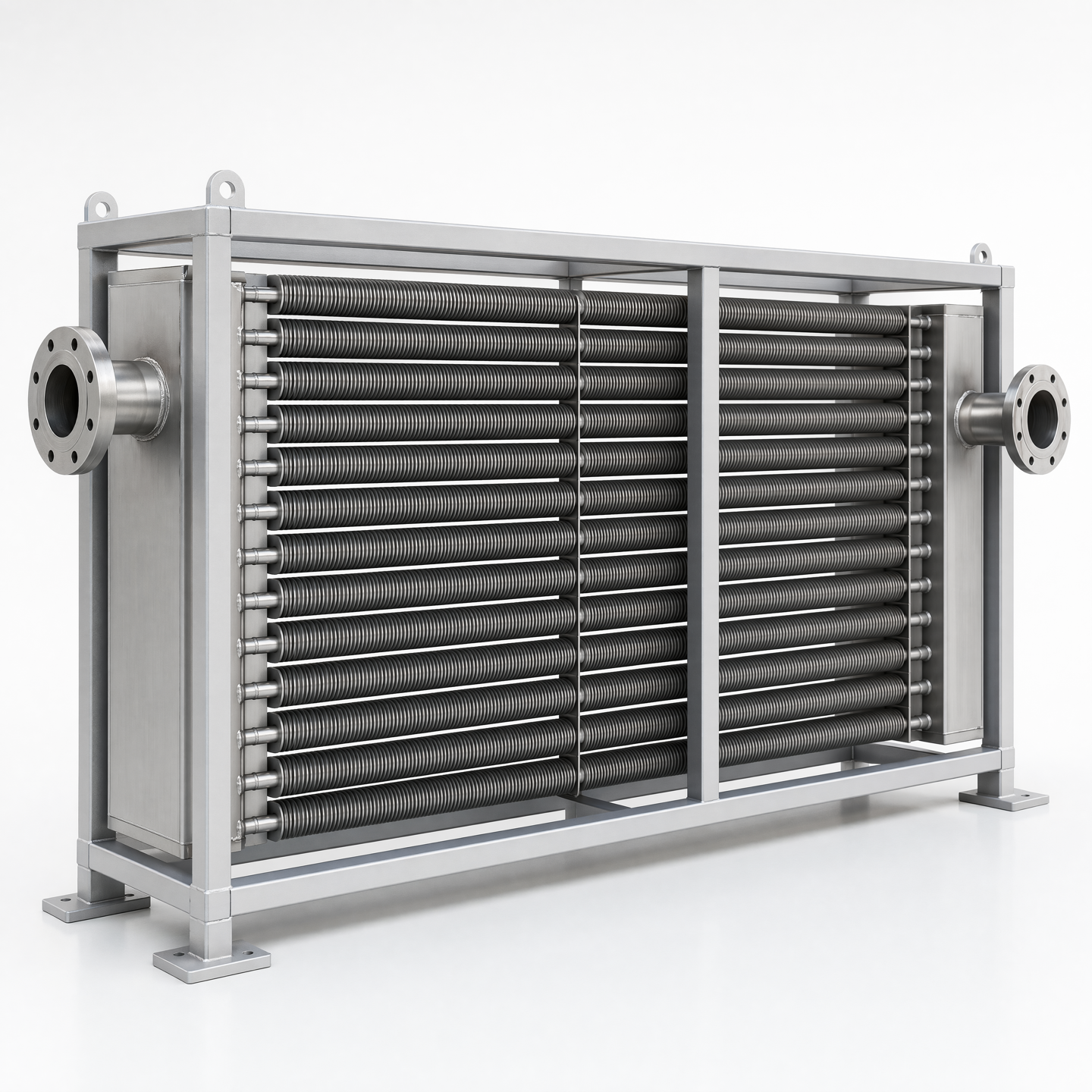
Illustrative complete rectangular finned-tube module with visible rows, headers and frame

Drawing release

What a finned-tube bundle drawing must show before fabrication

Define arrangement, tube zones, datums, supports, interfaces, sequence and acceptance as one controlled manufacturing package.

Manufacturing guide / Article 06

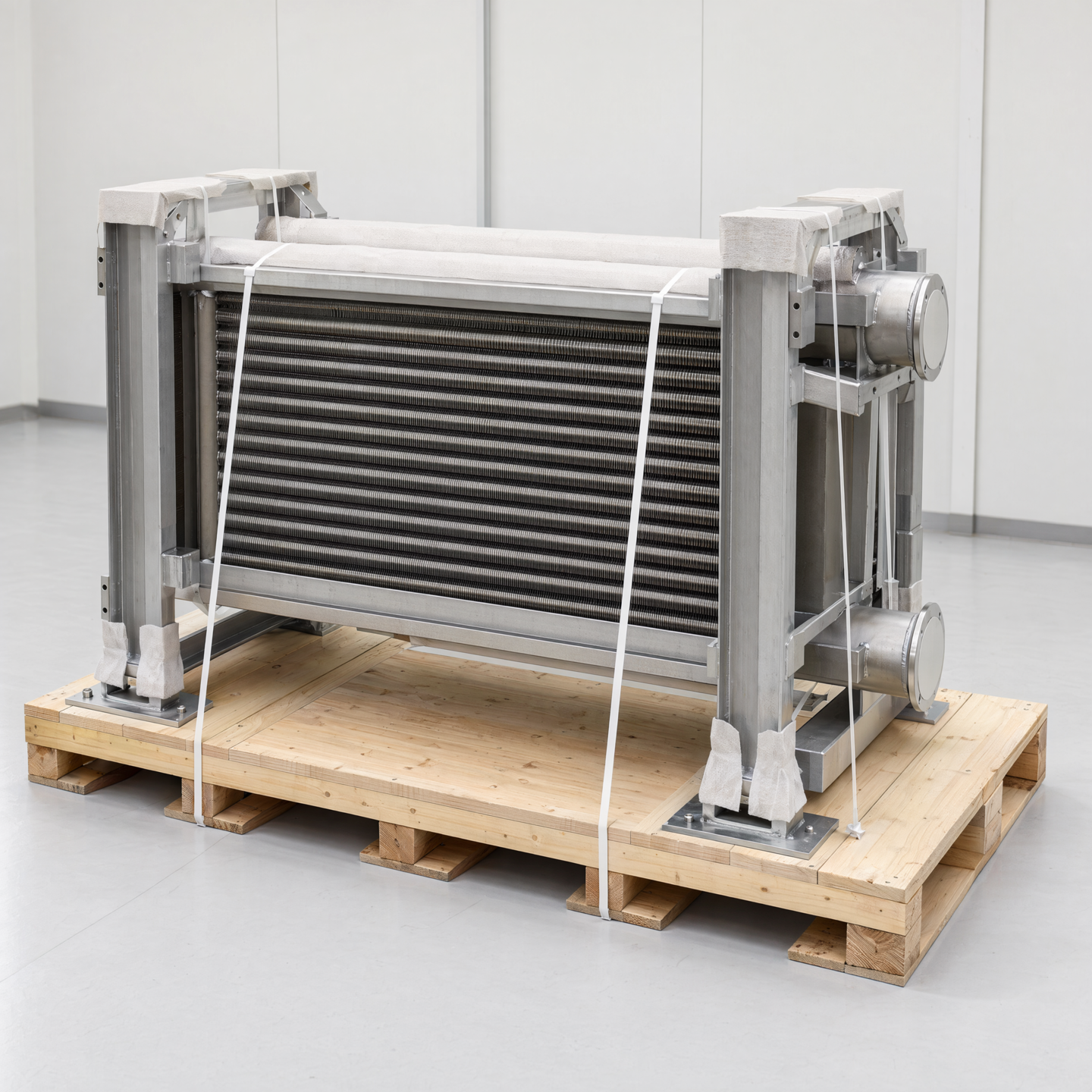
Illustrative exchanger restrained and protected on a shipping skid

Modular delivery

Planning shipping splits and reassembly datums for large heat-exchanger frames

Define module boundaries, locating references, interface hardware, packing states and verification before the frame is divided.

Manufacturing guide / Article 07

Knowledge map / Four manufacturing lenses

Move from the visible component to the decision it requires

The visual references now appear directly in the guide list above. Use this framework to prepare the drawing information and keep each question inside the agreed responsibility boundary.

Read each paired image as a relationship, not as a catalogue claim. Tube condition and handling affect what can reach the next assembly stage; connection access affects fit-up and the order in which nearby structure can close; inspection imagery identifies when a feature remains visible enough to check; and the complete unit brings scope, interfaces and delivery state into one review. Mark the relevant feature on the current drawing, name the decision owner and carry the accepted answer into the fabrication detail or scope note used downstream.

For designers

Bring the current geometry, interfaces and fixed design decisions. The guides help expose where a manufacturing answer still needs customer approval.

After reading, mark the joint, datum, support or access relationship that needs review and identify whether a proposed change can move or must return to the design authority.

For project teams

Use the maps to collect material requests, quantities, required handoff condition and the project requirements that affect quotation.

Package revision status, target date, installation constraints and open decisions together so the first response can distinguish missing information from a genuine fabrication conflict.

For quality teams

State which feature matters, when it can be checked and which record is required. Do not assume a method or document pack without agreement.

Connect each requested check to the controlling drawing and useful assembly stage. This helps prevent a record request from arriving after the feature is hidden or correction is no longer practical.

For procurement

Separate supply, fabrication, assembly, inspection and exclusion boundaries so quotations describe the same intended equipment state.

Confirm which parts are customer-supplied, sourced, fabricated or subcontracted, then compare quotations against the same assembly boundary rather than only against a list of components.

The guides are deliberately non-numeric until verified capability and project sources are available. They explain how to prepare a manufacturing conversation without inventing material grades, dimensional ranges, standards, qualifications, acceptance results, delivery history or real customer cases. When verified source material arrives, update the affected guide, caption, scope note and inquiry checklist together rather than adding an isolated claim. Keep the source and revision owner visible for future review.

A useful reading path begins with the relationship that is least defined in the current package. Start with ownership when the decision maker is unclear, with the review-package guide when sources conflict, with access or frame alignment when the assembly state hides critical work, and with handling when temporary support or protection has not been planned. Turn the resulting question into a marked drawing item or scope note before sending the inquiry. The guide is complete only when it helps the project team request a decision that can be recorded and carried downstream.
Apply the notes / Your design

Use the guides to prepare the first manufacturing conversation.

Share the design status, interfaces and governing requirements. We will return the manufacturing questions that need agreement.

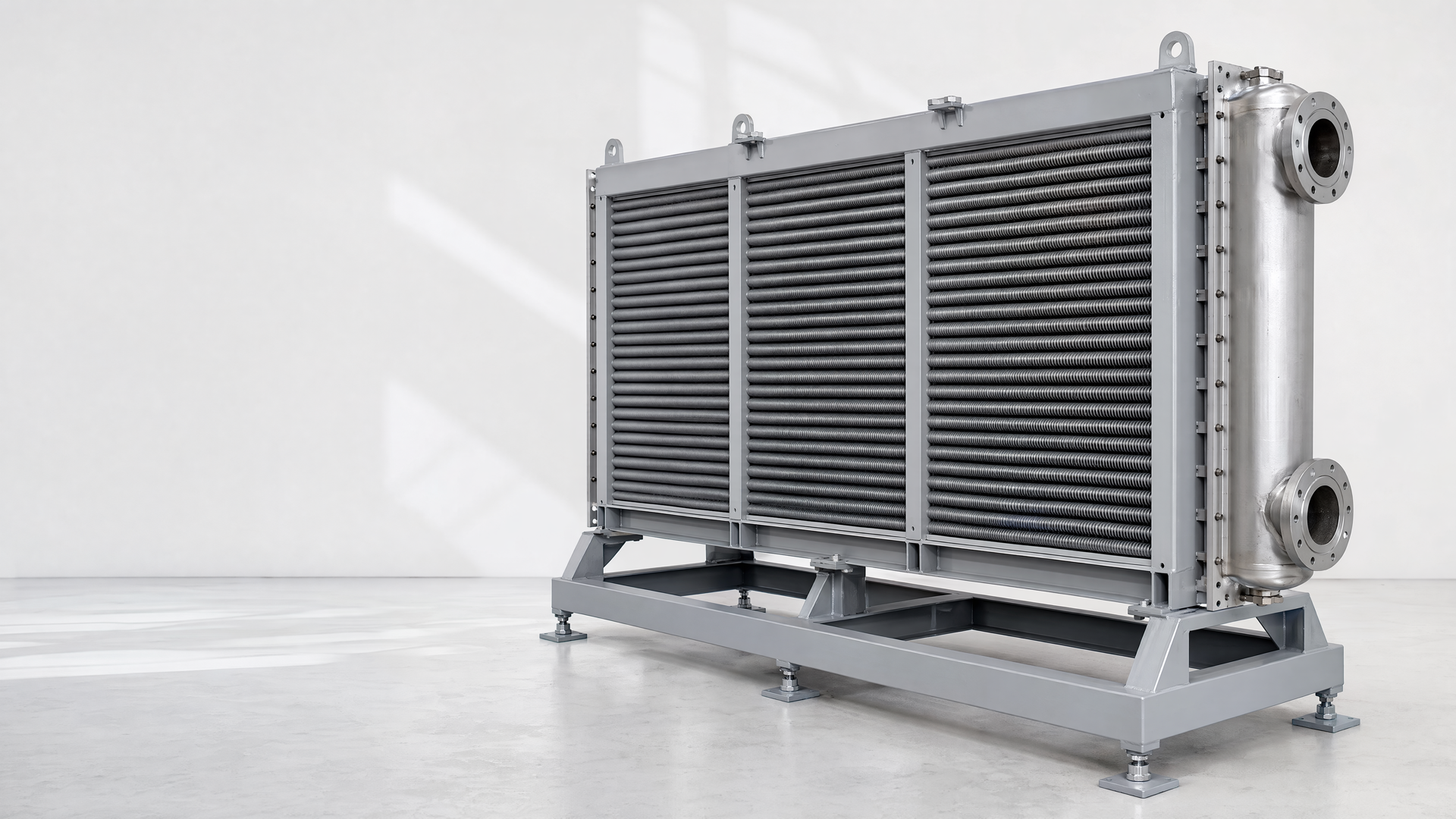
Complete finned-tube exchanger presented with clear space for review information