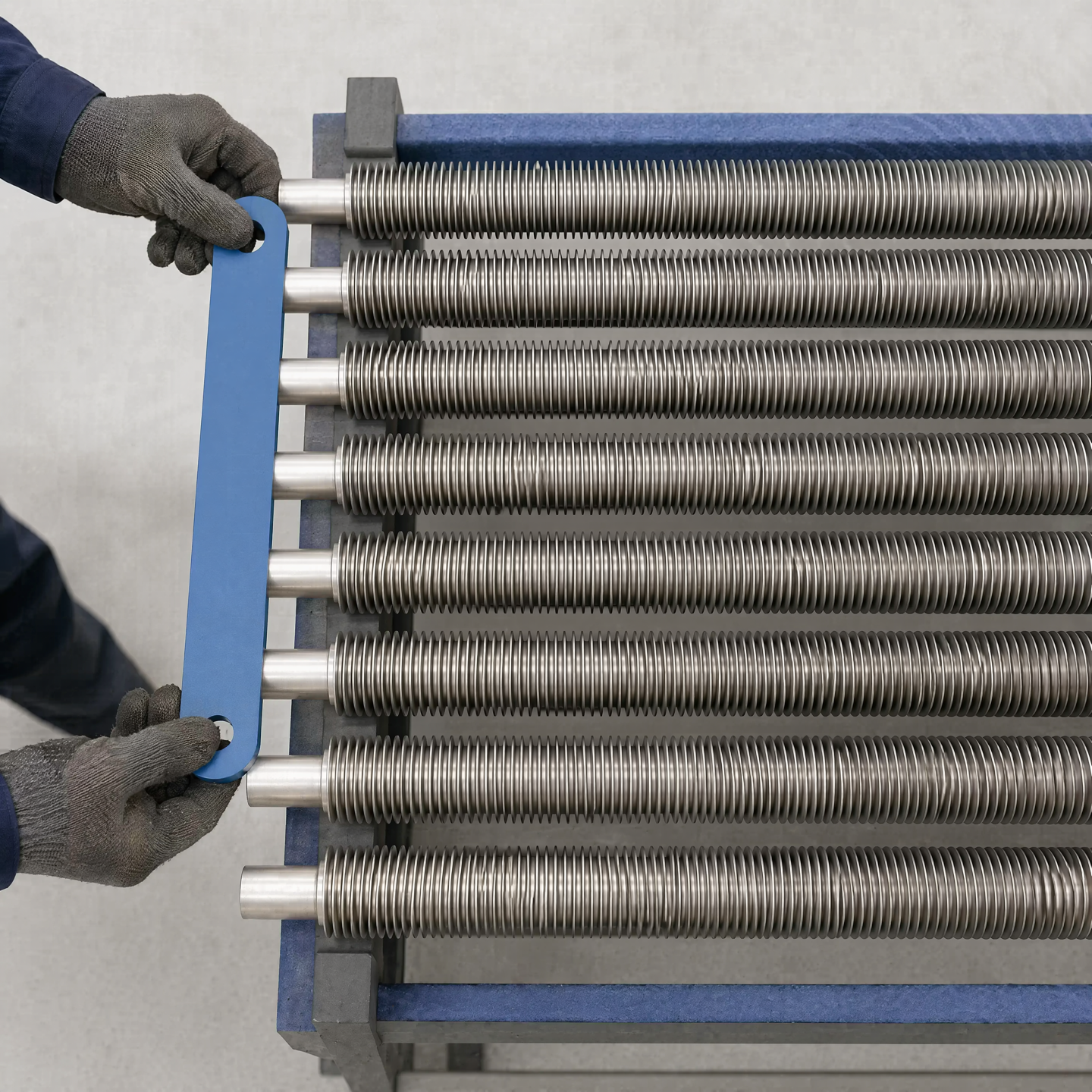
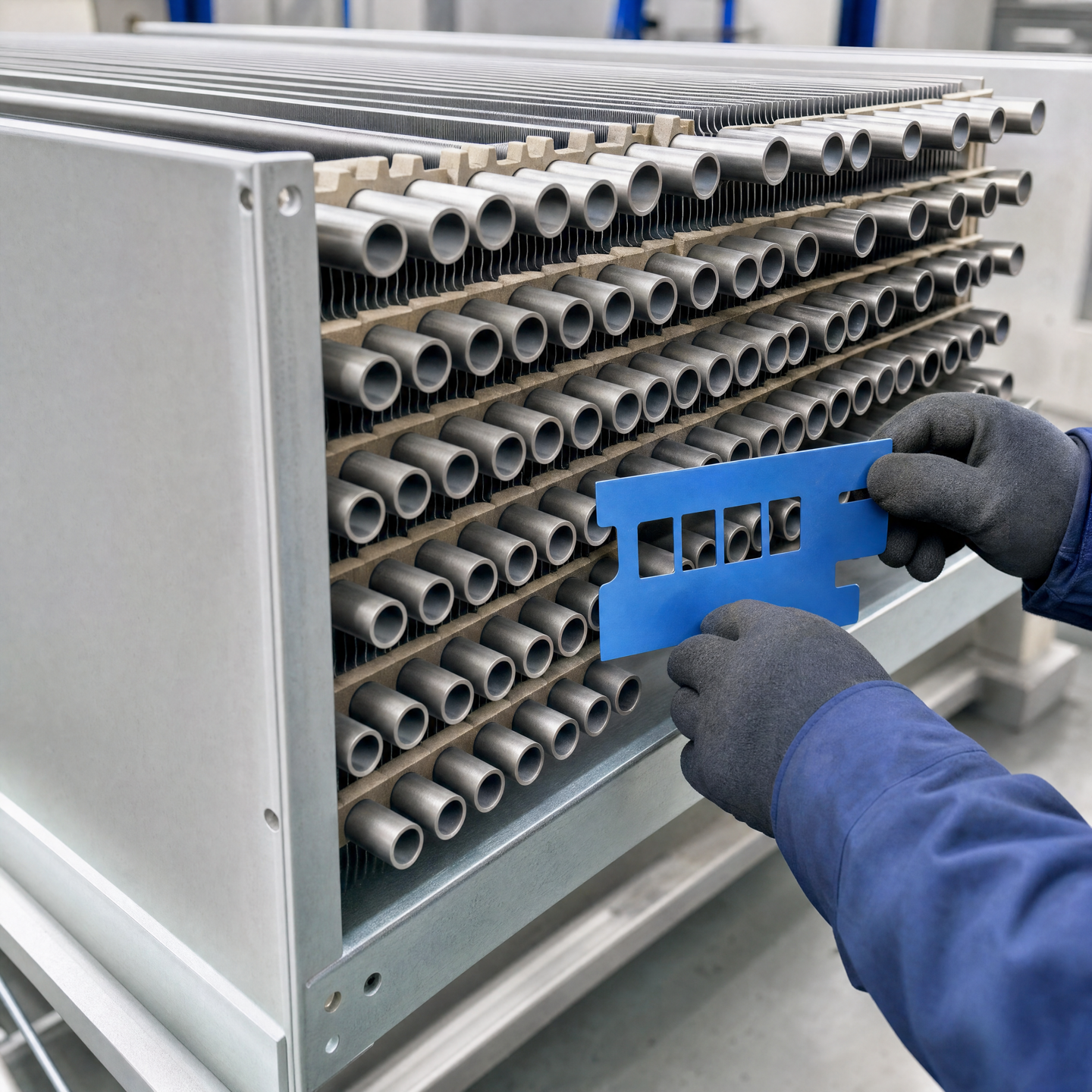
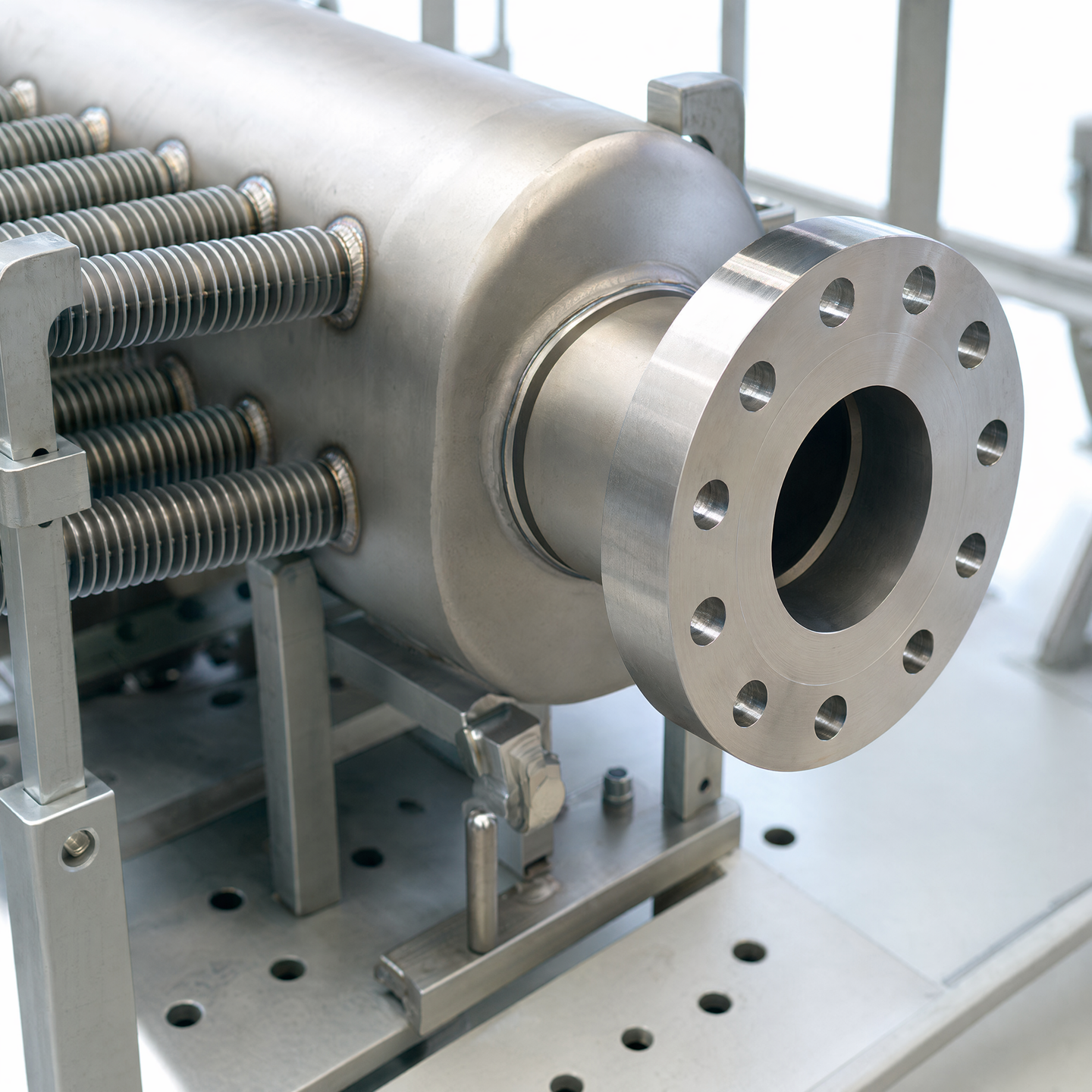
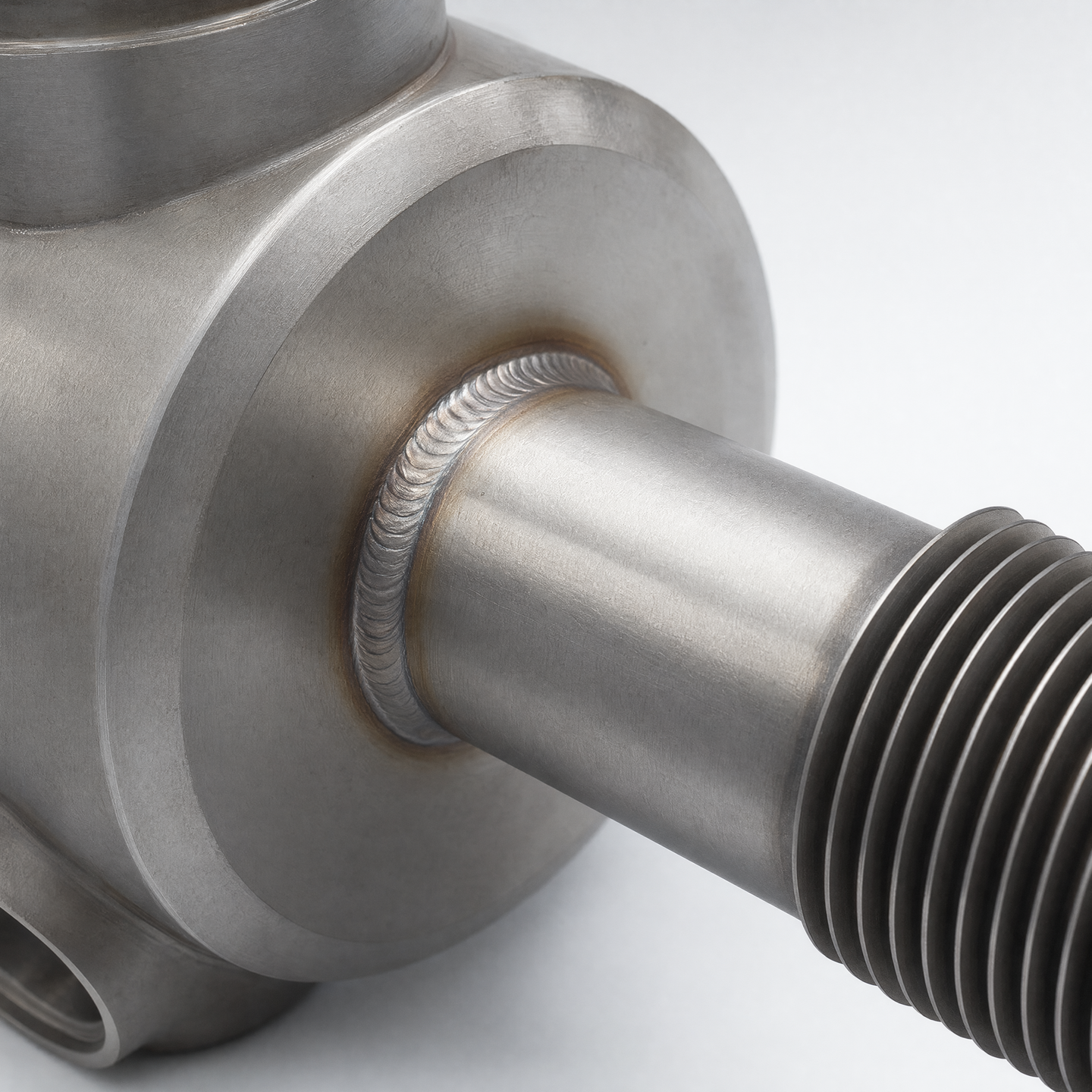
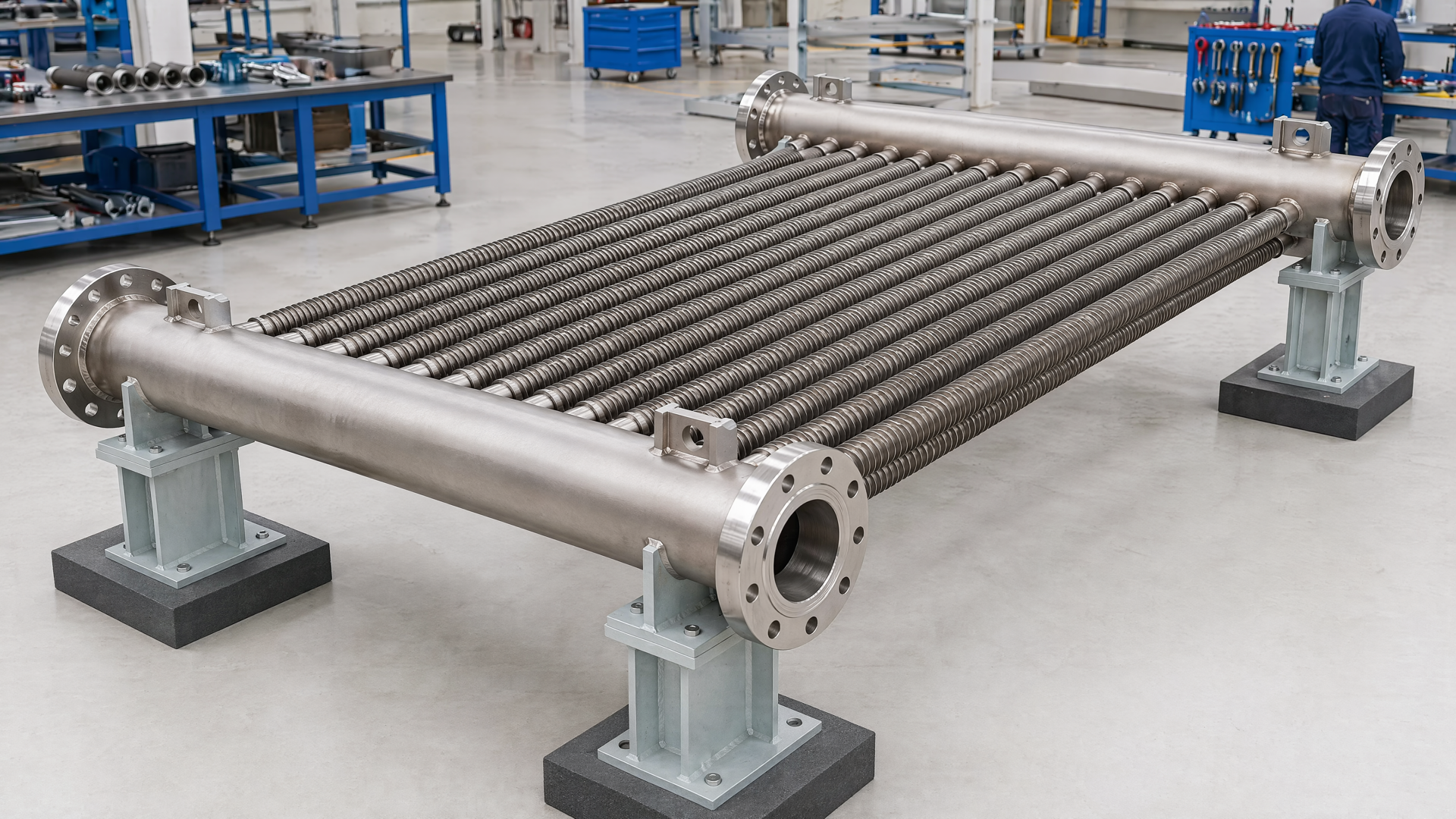
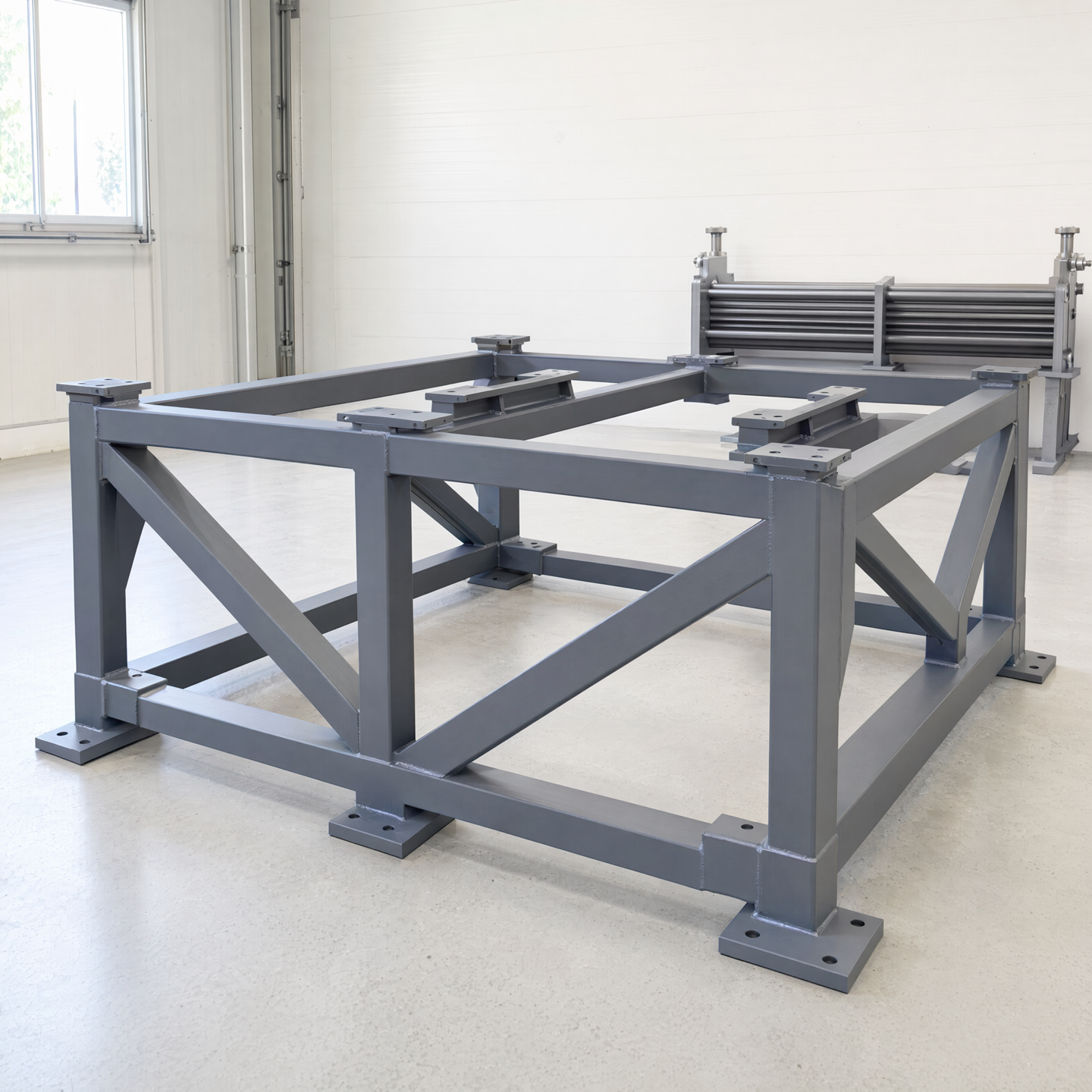
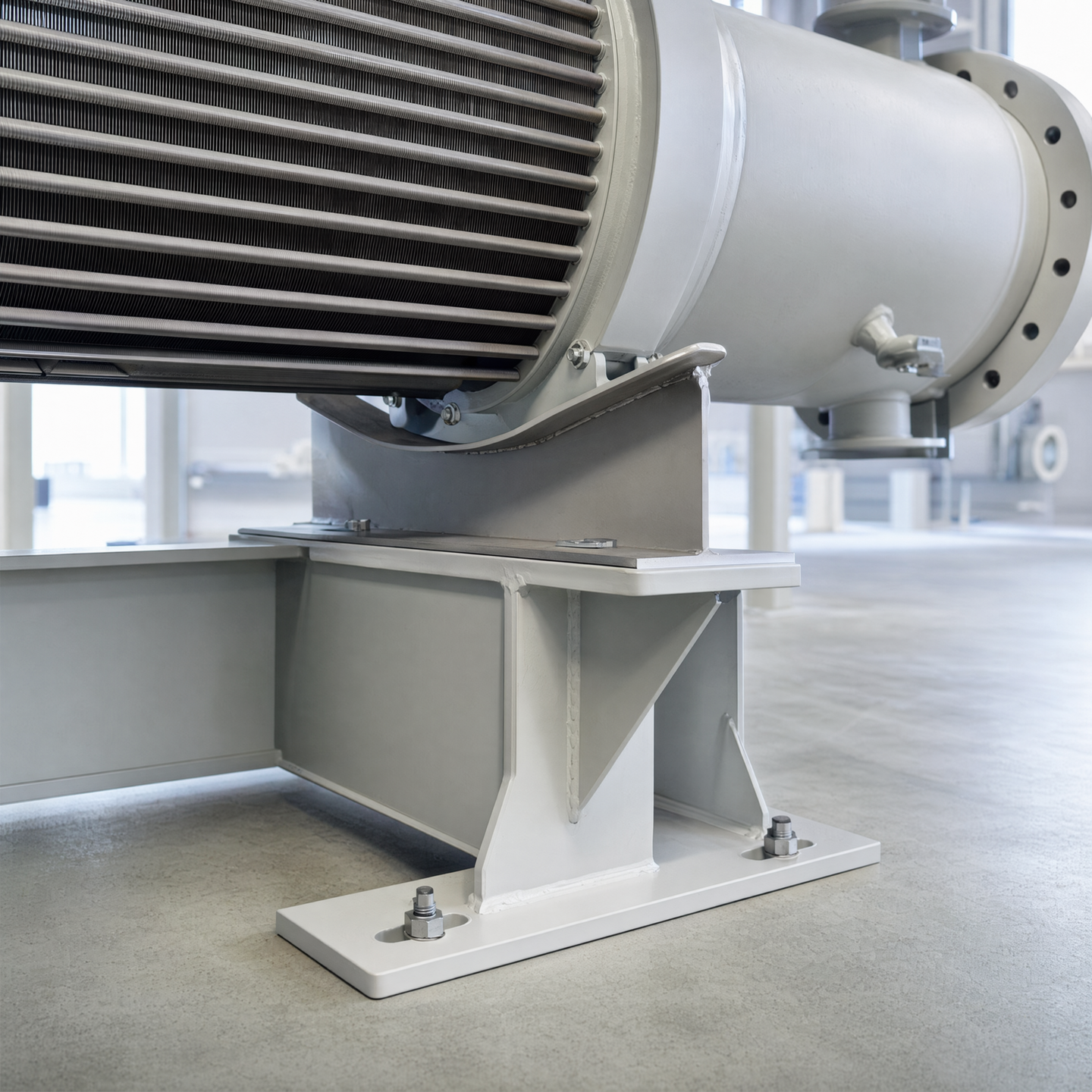
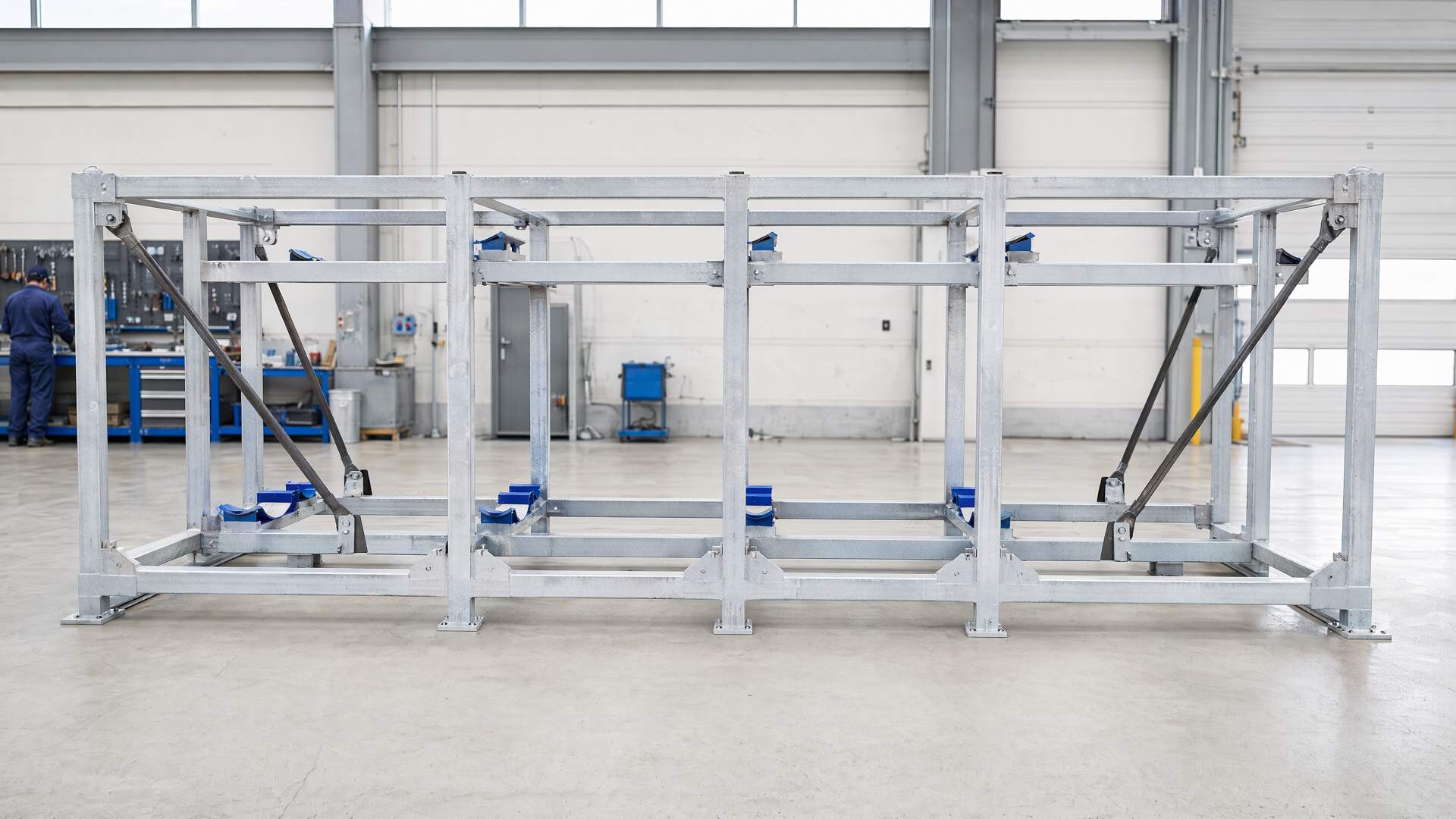
06 / Interface review framework
Review the points where one manufacturing state becomes the next
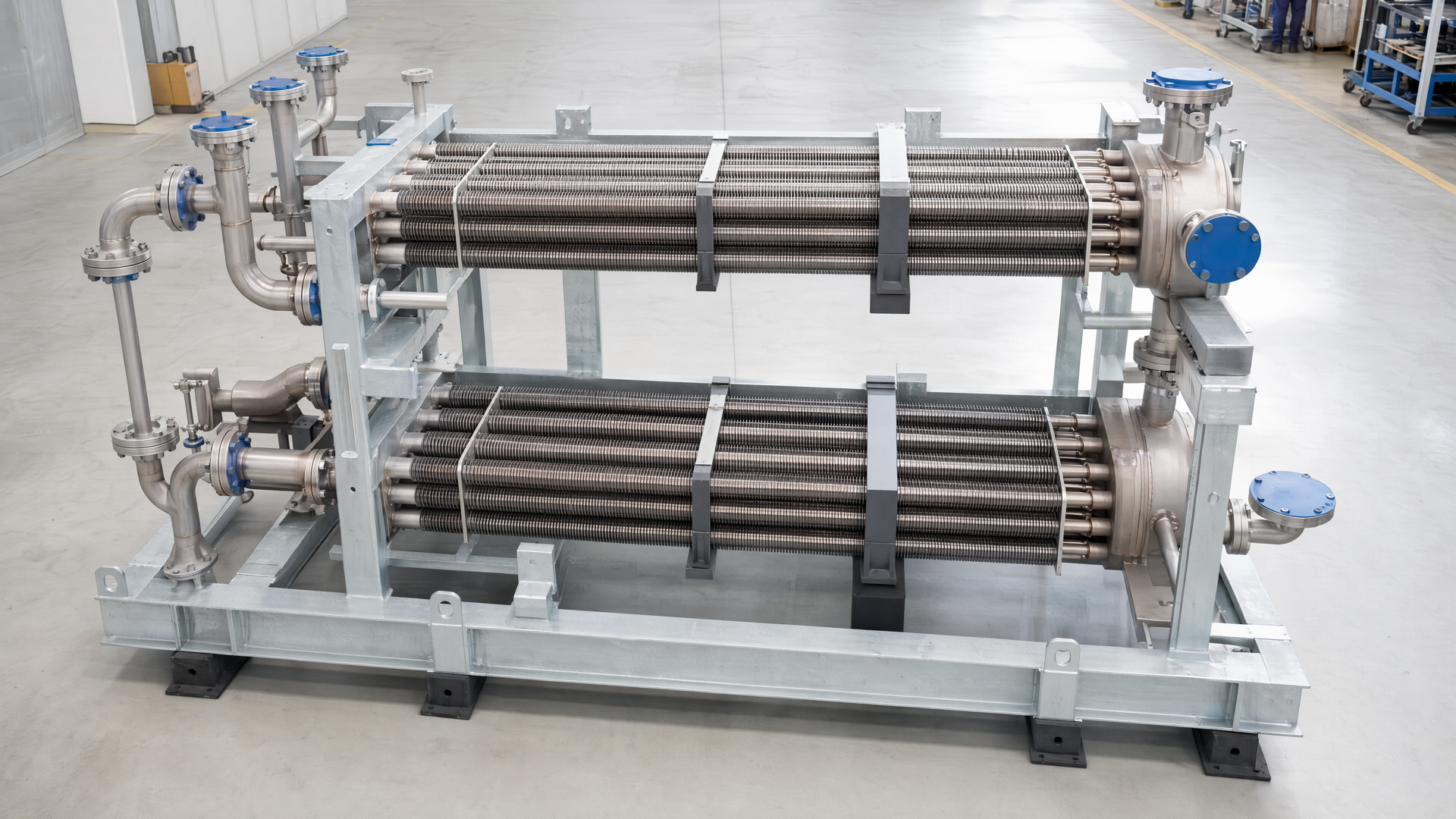
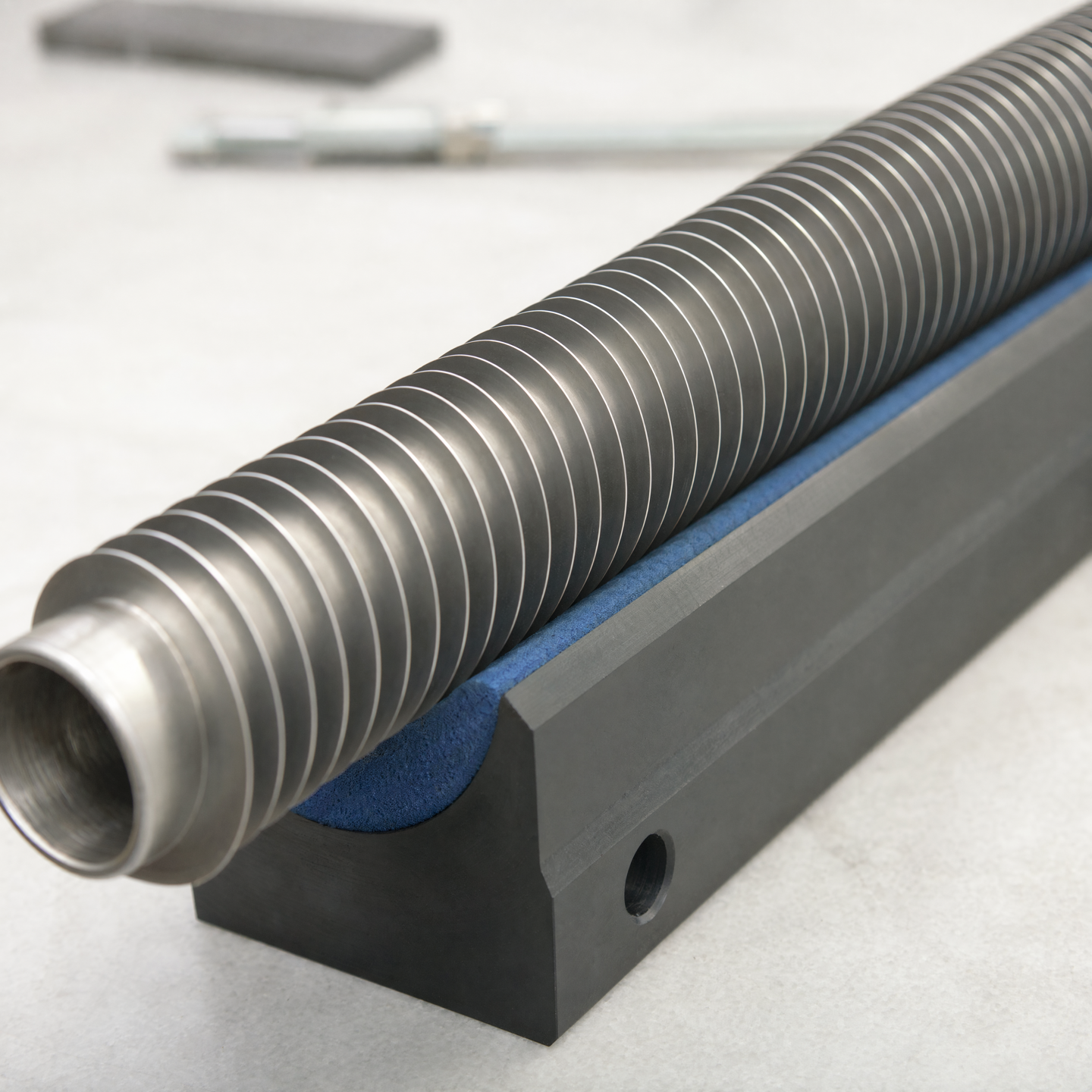
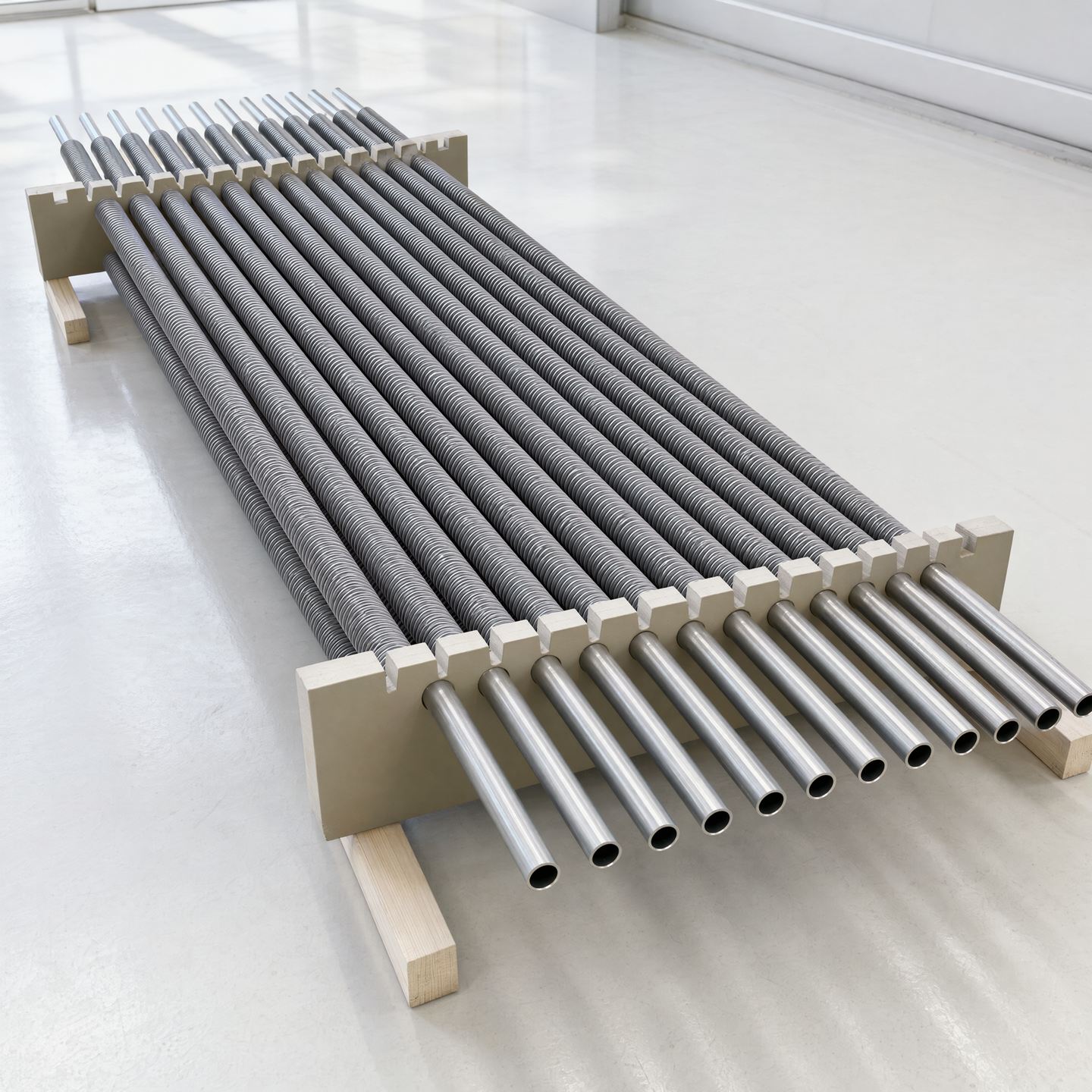
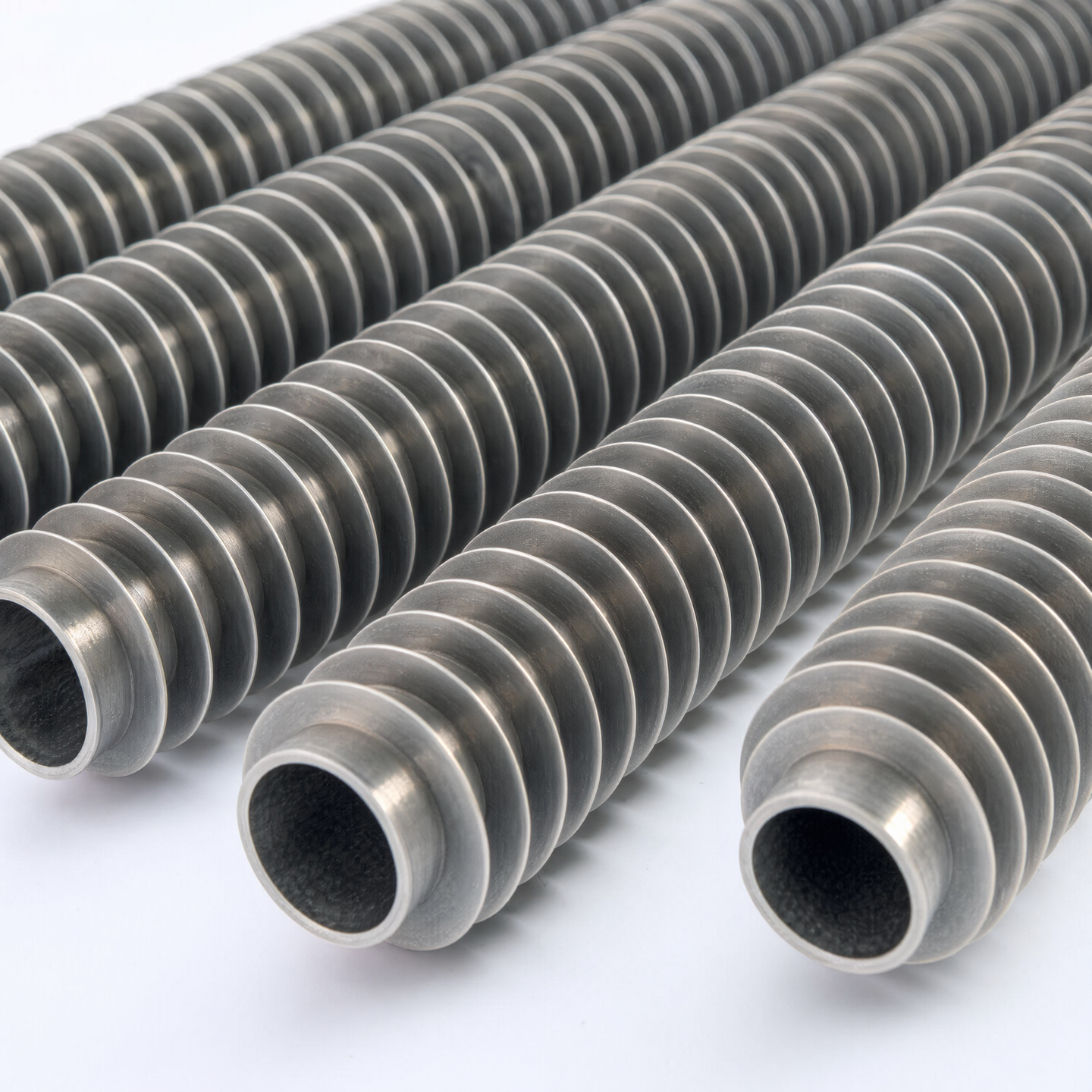
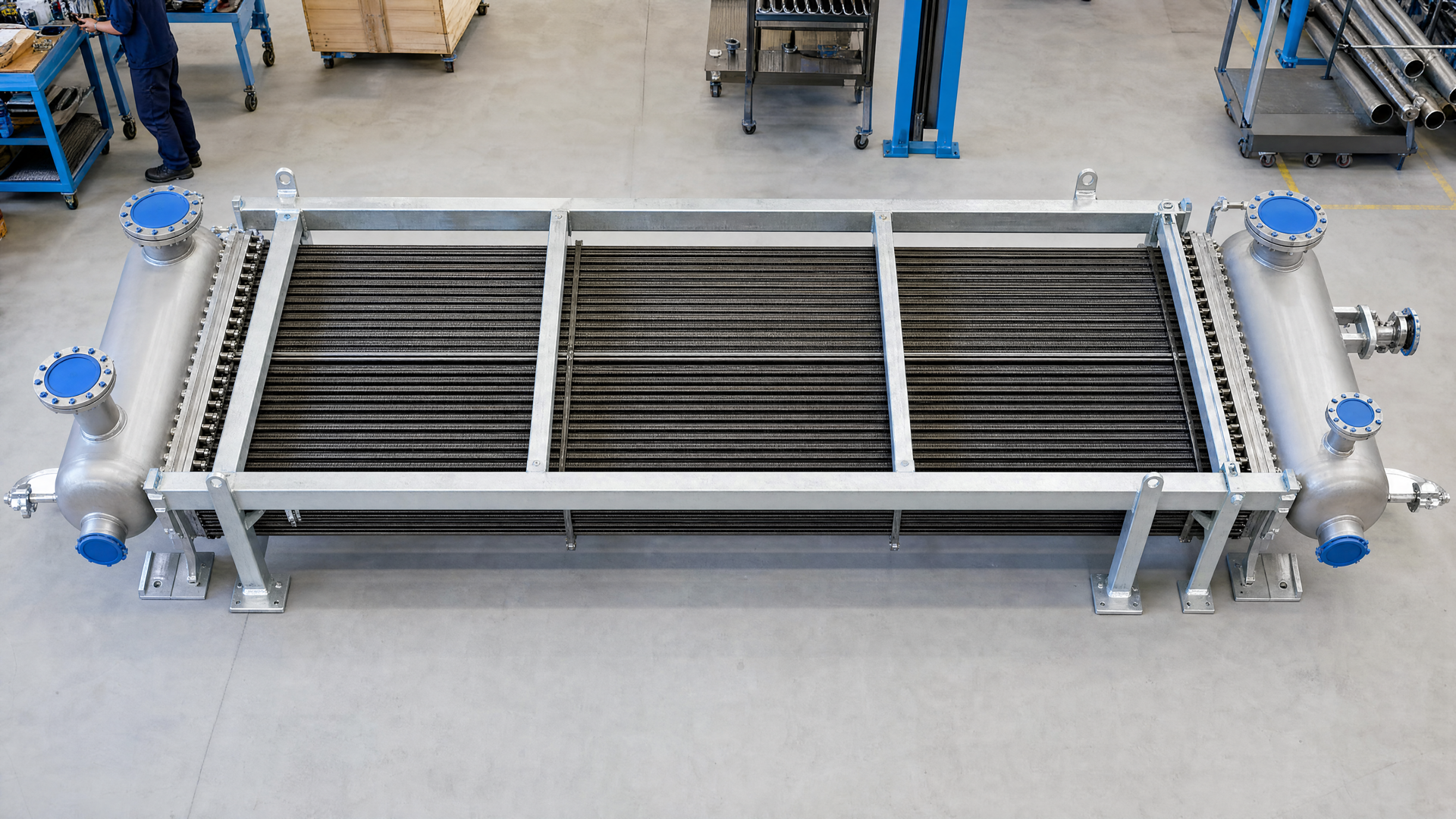
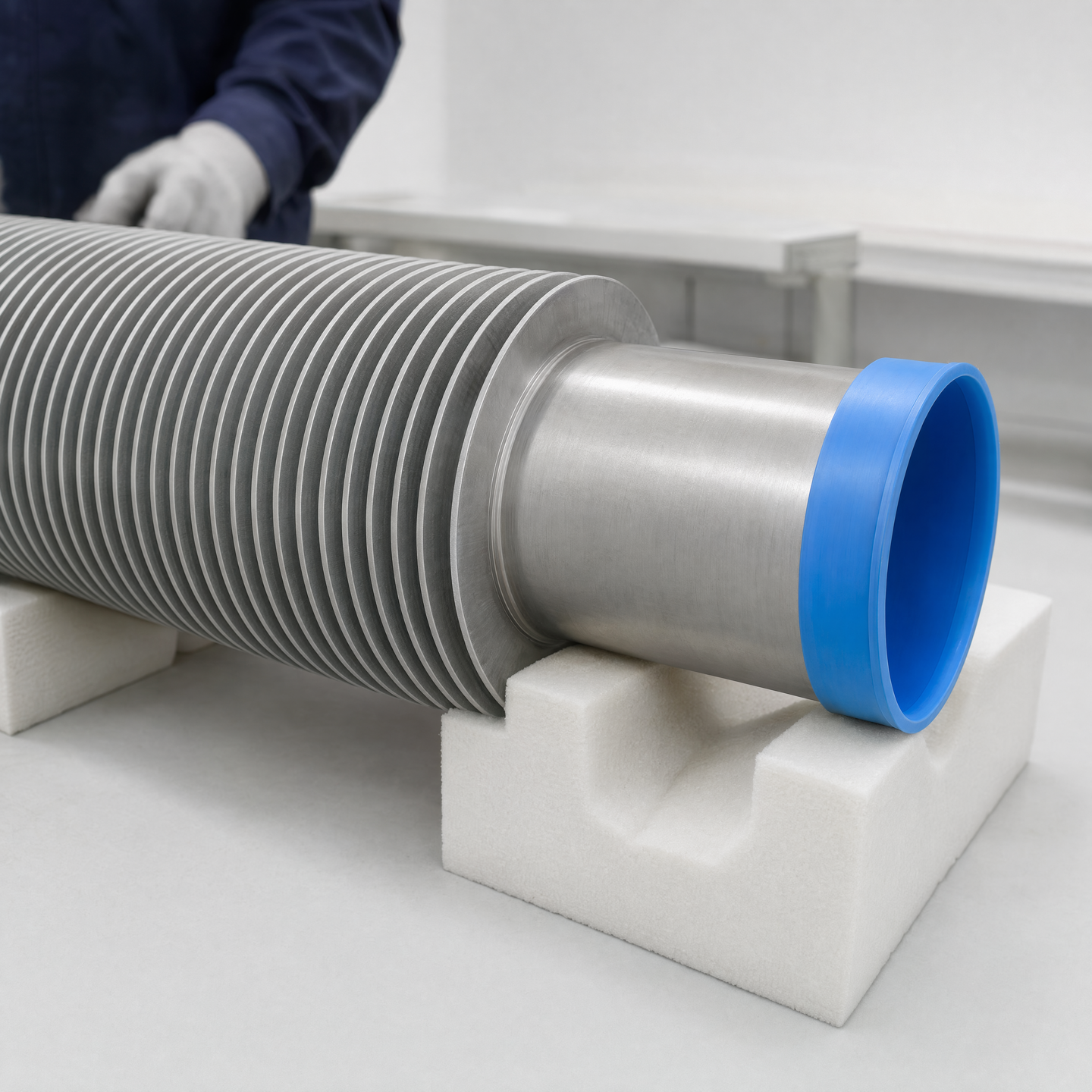
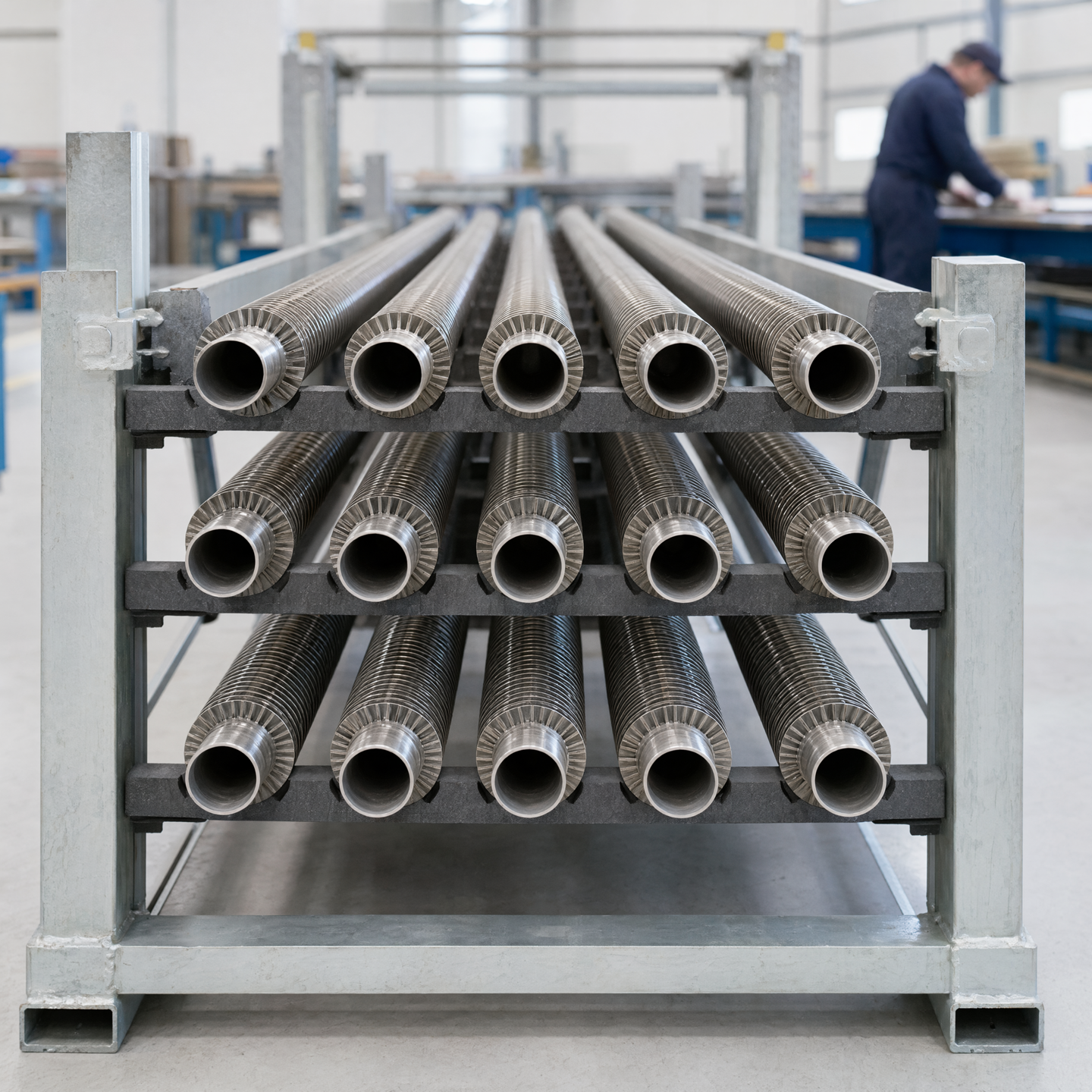
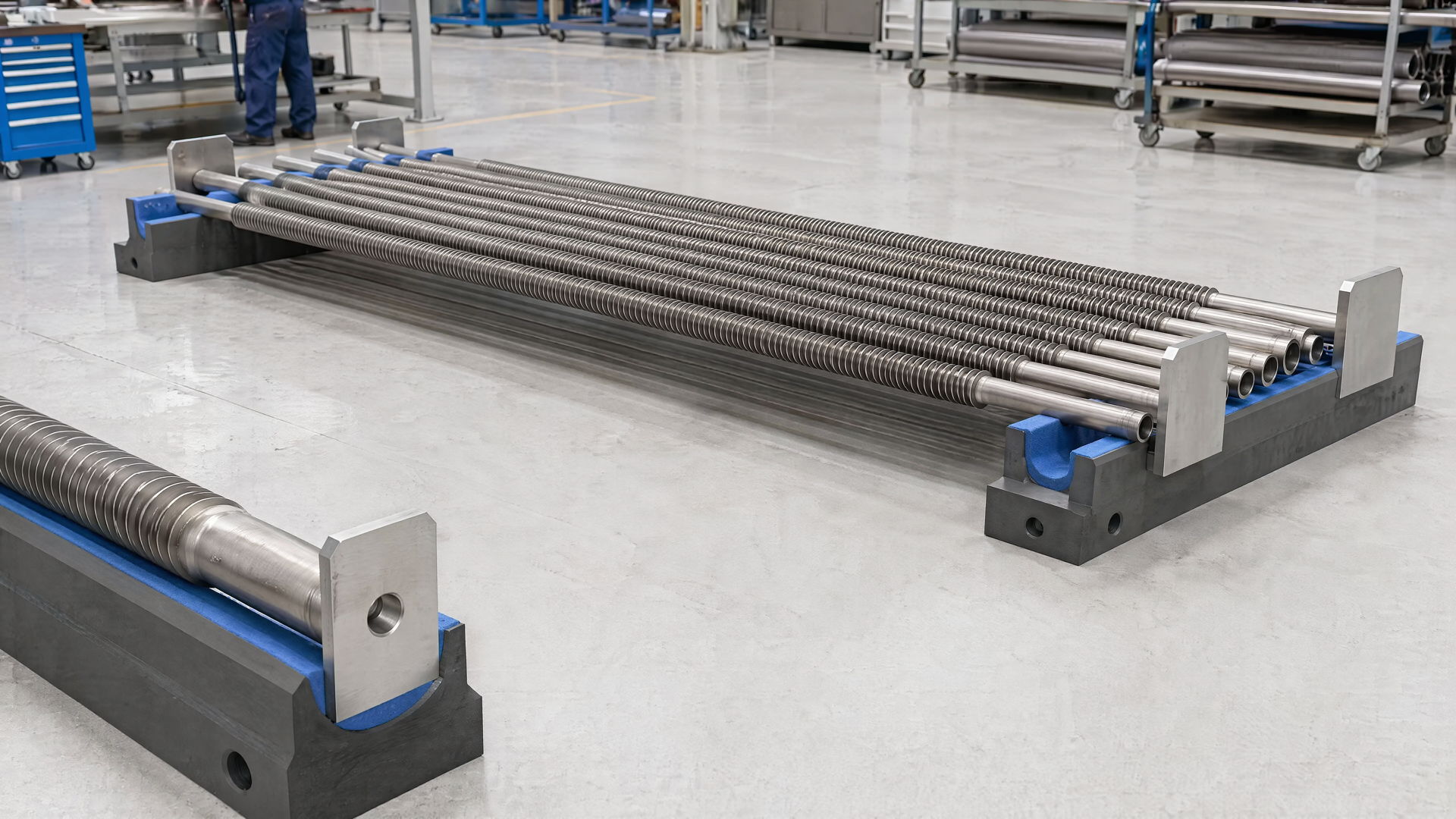
The visual states now sit inside the capability they explain. This framework keeps their inputs, decisions and responsibility boundaries connected.
Inputs that control the review
Current product drawings, tube and fin requirements, tube-end condition, header and flange geometry, support intent, customer-defined datums, handling restrictions, inspection expectations and scope exclusions form one package. Mark supplied items and fixed customer decisions clearly.
Revision status matters because one interface may appear in several files. Identify the controlling view and list customer-supplied components separately from requested fabrication items. A preliminary package may leave dimensions open, but it should still show which envelope and connection decisions cannot move.
Questions returned for agreement
StelTherm identifies where fit-up direction, access, restraint, sequence or inspectability conflicts with the controlling geometry. Proposed manufacturing changes are tied to the affected interface and returned before they alter a customer-owned requirement.
The response describes what the shop cannot reach, hold, measure or protect in the proposed state. It then names the practical option, the drawings affected and the decision required. That keeps a fabrication suggestion from silently becoming a thermal-design or equipment-selection decision.
Decisions carried downstream
An accepted answer updates the fabrication detail, temporary support, assembly stage or check point that controls later work. That prevents one local convenience from blocking the next row, hiding a flange face or removing the only useful datum.
The same answer should appear wherever downstream work depends on it: the detail drawing, fit-up note, fixture concept, sequence instruction, inspection point or scope assumption. If those artifacts disagree, the route is not ready even when each isolated component looks plausible.
Scope remains explicit
Prepared components, connections, frames, joining, complete assembly, checks, records and protection are included only as agreed. This review does not transfer thermal sizing, selection, certification or performance responsibility to StelTherm.
Quotation language distinguishes in-scope work, sourced items, subcontracted or third-party work, customer-supplied information and exclusions. Exact processes, standards, inspection methods and document packs remain order-specific until supported by the approved requirement and commercial scope.
Closing the review
Six relationships need a visible answer
A capability review closes when the manufacturing route can explain what locates the component, what keeps it accessible, what state comes next and which drawing or agreement controls the result. A generic promise to make the part is not enough.
The table is a review framework, not a universal process specification. Actual materials, dimensions, joining methods, acceptance values and supplied records come from the customer requirement and the scope agreed for the order.
| Relationship | Question before release |
|---|
| Tube end | Are fin termination, bare-end condition, protection and entry direction compatible with handling and the intended connection? |
|---|
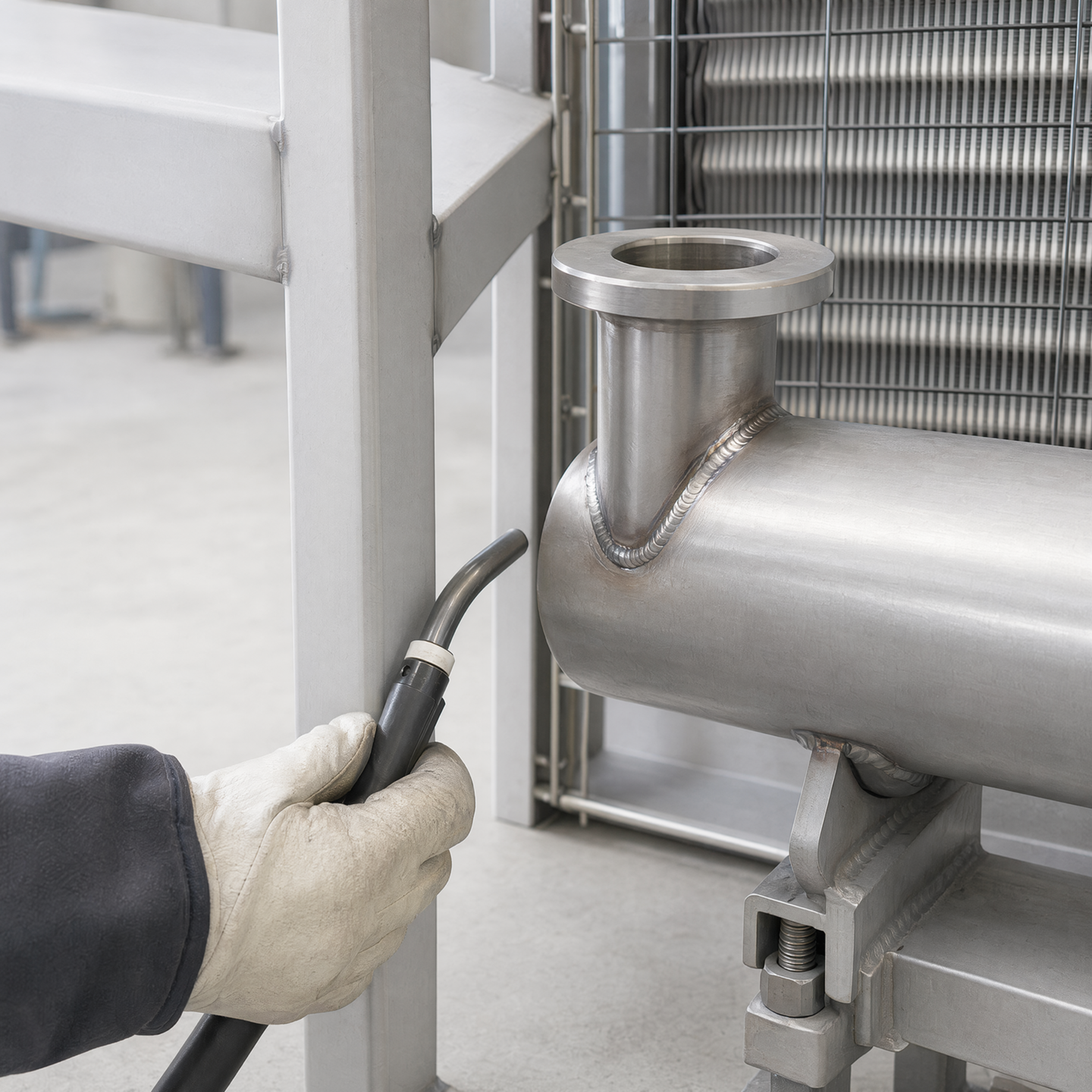
| Header and flange | Can each tube path, nozzle orientation and flange face be fitted, joined and rechecked before adjacent structure removes access? |
|---|
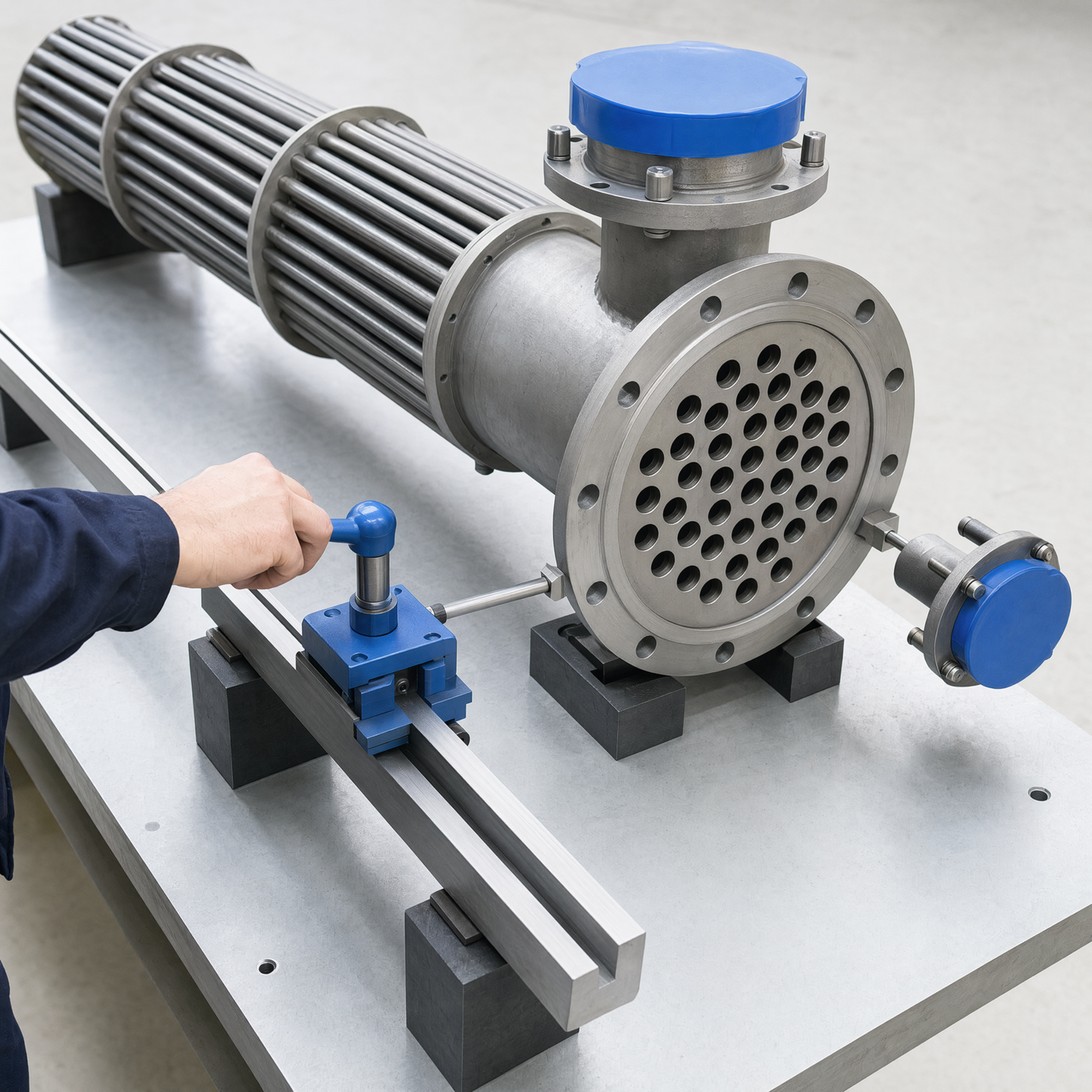
| Frame and support | Which customer-defined interface establishes position, and how is the bundle inserted and restrained without competing for the same space? |
|---|
| Joining access | What tool, fixture, approach and line of sight are needed in the real assembly state, and which component closes that access next? |
|---|
| Datum and check | Which external reference remains available after each joining stage, and when can the affected feature still be corrected? |
|---|
| Handoff | What arrives complete, protected, loose or prepared for later work, and which selected records accompany that condition? |
|---|
Before quotation
The first pass checks document completeness, responsibility boundaries and whether the requested assembly can be described as a coherent manufacturing route. Open facts are listed rather than filled with assumed dimensions, materials, processes or standards.
Before fabrication detail
Customer decisions affecting geometry and interfaces must be resolved or explicitly carried as controlled assumptions. The route identifies which detail can be developed by StelTherm and which change still needs design-authority approval.
Before assembly closes access
Confirm temporary support, fit-up direction, joining sequence and the check points that depend on an open frame or visible interface. A late inspection instruction cannot recover access that the assembly has already removed.
Before handoff
Verify the agreed mounting points, connection faces, openings, support relationships, protection and selected records against the order-specific basis. Unconfirmed certification, performance or inspection claims remain outside public and delivery language.
Capability information should be maintained as controlled product data, not inferred from a generated image or one completed order. A publishable range needs a verified source, clear ownership and a revision process. Until that exists, quoteability remains drawing-dependent and the customer inquiry should receive a focused review of geometry, materials, quantity, interfaces, requirements and intended delivery state. When a verified fact changes, revise every dependent prompt, caption, page module and inquiry field so public language and working documents remain aligned. Keep that change traceable.
When an option cannot yet be supported by controlled capability data, the review should return a specific open item rather than fill the gap with a generic promise. Name the requested feature, the source still needed, the manufacturing relationship affected and the decision that remains with the customer. Once confirmed, carry the answer into the quotation basis and the detail that governs downstream work. This approach lets early review continue while keeping exact materials, dimensions, processes, standards, records and acceptance values outside the public capability statement until they are verified.